
.png)
Growing up queer, especially in a rural community, isn’t easy. This is something “Big Girls Don’t Cry,” the debut from New Zealand writer-director Paloma Schneideman, knows intimately. Set in the summer of 2006, the film follows Sid (Ani Palmer, delivering a knockout debut performance), an angsty teen coming of age in a newly digital world. As she tries on new personality traits like outfits and flits from friend group to friend group, Sid also contends with her newfound sexual desires, without much of a roadmap.
Writing out of the film’s world premiere at this year’s Sundance Film Festival, where it competed as part of its World Dramatic Competition, I found that “what really makes this film special is the way Schneideman subtly indicates how painful it was in that era to grow up queer without any real support system, even if you never experienced any actual violence.”
Hailing from Tāmaki Makaurau, Auckland, New Zealand, Paloma Schneideman is a multi-talented writer, director, and musician whose work explores the complexities of family, intimacy, and identity. Although she intended to pursue a double degree in law and the arts at Victoria University in Wellington, Schneideman dropped out after a year.
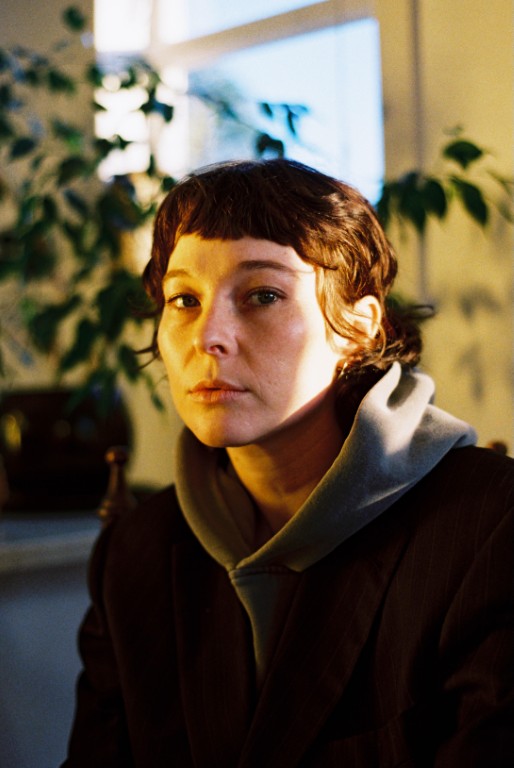
She worked at the Matakana Cinemas and traveled before deciding to follow her heart and transfer into the performing and screen arts program at Unitec Institute of Technology in Auckland. Working across the film and music industries for the last decade, Schneideman has performed at music festivals under the moniker PollyHill and directed music videos and short films, including “Mine” (2015), “Memory Foam” (2019), and “Gate Crash” (2023).
Schneideman drew on her rural upbringing and queer coming-of-age for “Big Girls Don’t Cry,” which she partially developed during Oscar-winning filmmaker Jane Campion and producer Philippa Campbell’s filmmaking intensive, A Wave in the Ocean. Schneideman was one of ten participants selected for the first cohort, where she worked with Campion, Campbell, and other industry professionals to hone her directorial voice.
Speaking about the program with RogerEbert.com in 2023, Campion shared that “mostly, you learn through having the opportunity to try to do things” and that it felt “absolutely fabulous to create a program that I think is really wholesome and exciting.”
The intensive work certainly paid off for Schneideman. After its world premiere at Sundance, “Big Girls Don’t Cry” screened at South by Southwest, BFI Flare: London LGBTIQ+ Film Festival, TIFF Next Wave, Melbourne International Film Festival, and as the opening night film of the 2026 Whānau Mārama New Zealand International Film Festival.
For this month’s Female Filmmakers in Focus column, RogerEbert.com spoke with Schneideman over Zoom about Jane Campion’s mentorship, why casting is such an important part of directing, the simultaneous singularity and universality of rural life, yearning for the 2000s, and why her subtly queer twist on the coming-of-age genre belongs to everyone.
This interview has been edited for length and clarity.
You developed this film as part of Jane Campion‘s intensive filmmaking course A Wave in the Ocean. Could you talk about that process?
I have nothing but love for Jane and Philippa Campbell, who ran the course. I was part of the first cohort. I remember seeing the application for it on social media. I was already a year or two into drafting this film. I already had a producer. I was also building my portfolio, making shorts and music videos.
When I saw the opportunity to do this film school for a year with the great Jane Campion, where you got to make a short film, I wasn’t sure I wanted to do another school because I had already been to film school and participated in mentorships. Anything that could do to hone my craft, I’m always the first to put my hand up and do it. But my producer convinced me to apply, and I’m so glad I did, because I’m pretty sure the film wouldn’t have had as much depth without this extensive year with Jane and Philippa.
There were ten of us in the program, and we learned so much from each other and with each other. We became friends and found a community, which can often feel quite lonely in this emerging space. The school was very holistic and spiritual in many ways. We learned about cameras and lenses, of course, but we’d also take a week off for a yoga camp. Kim Gillingham would come and teach us about our dreams.
So, I was meant to make a short the following year, in 2024. Jane knew about the feature I was developing. She’d let me use the course to practice my skills. She read the script. She really loved it and gave me feedback. As I got closer to shooting this short film, which I had written a script for, Jane said, “I think you should just do the feature.” She knew that my instincts were much sharper, and I was much more ready to do the feature. I had lived this feature, and I’d been thinking about it for like five years at this point. So she gave me her blessing to do it.
And you know, when someone like Jane Campion tells you you’re ready, then you believe you’re ready. She’s been riding with us the whole time. She visited us on set. Gave feedback on casting. She’s just the best.
Even though this is set in New Zealand, growing up queer in a rural community feels the same in every rural place around the globe. Rural isolation is so real, even though it’s specific to the regions. What was the process like for you to tap back into all of that and turn it into something so beautiful?
I always say I made this film for my 14-year-old self. I do think a big part of making this film was trying to process what it was like to be a teenager from a small-town upbringing, leaving the small town for university, and meeting my community of friends and queers and artists. There was always this little bit of shame in my chest. I really didn’t feel like I could talk about what it was like to grow up and to be so lonely and to be so confused and to have sexual desire.
I honestly couldn’t talk about that until my mid-20s, when I found my community. I also felt a collective awakening when we started chatting about our experiences. Then you start to realize that everyone’s had a version of it. That’s when I realized I needed this film. Yes, for my 14-year-old self, but also for this community.
Because you know it’s all about building language, right? That’s what films give us: more language to understand ourselves. So, while making the film has been unbelievably cathartic for me to process it all, I also feel responsible for my peers and my friends. What’s funny is that the film doesn’t feel like it’s just mine anymore. When someone messages me and says “I felt so seen,” I know it’s not just my film; It’s theirs, too. So, yes, I think it’s been cathartic for me. But I think what’s been more rewarding is what it’s offered to other people.
And you’re right about the rural thing. It’s this unexplainable phenomenon of hoping there’s something more out there, and not being sure if there is. Also, in rural places everyone knows everyone. So there is a real collective, family mentality, but also people still judge you.
It’s both. I feel like if you didn’t grow up in a rural space, you either believe one side of the stereotype or the other. It’s hard to explain that it’s actually both. It’s really warm and loving, and also really horrible, and people can be so snippy.
I think that’s why I love that in our film we have these city folk who come in and infiltrate. It helped unlock this other cultural and socio-political world, shake up this small-town bullshit, and introduce more bullshit. The rural thing is funny, because it does seem to resonate across the globe. Every small town feels like there’s something similar no matter where you are.
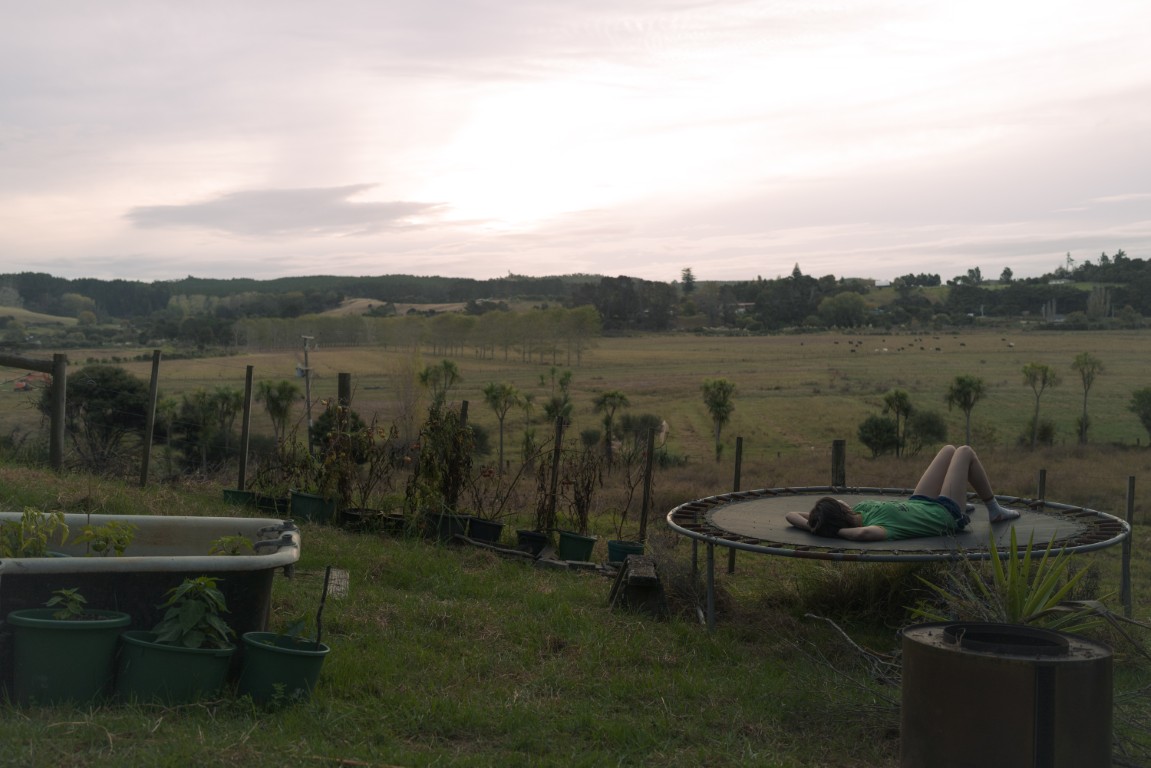
The best films about rural life always come from people who have lived it and get the little details right. You also set this film in the mid-2000s and fill it with lovely period-specific details like the Van Dutch trucker hats, MSN Messenger, and the way text messages cost an arm and a leg. As you were crafting a period setting, how did you know which details to include without it feeling like pastiche?
Honestly, just like lived experience. This was not a quick script. I spent three years redrafting, not because it was a hard script to write. That’s just the reality of being an artist in New Zealand. You have to work seventy-five other jobs. But as I was writing, it was about trying to figure this story out, both the psychological scarring and the joy that the sounds and the textures of that time bring me. They are so visceral; more than anything, they let me know I could honor that time period.
I remember the excitement of getting my first email address, and all of a sudden, I could take my sister’s laptop and be in chat rooms. I remember the excitement of discovering LimeWire, and every song was suddenly at my disposal.
I remember LimeWire.
You give your computer a million viruses.
Then you have to convince your parents that you don’t know how it happened.
Like, yeah, the computer’s broken, but it was worth it for that one Pretty Ricky song that you burned onto a CD and became the soundtrack of your adolescence.
Exactly.
I think we’re quite obsessed with the nostalgia of that time today because we’re realizing that, before the birth of the internet, it was almost a pure time, I guess, and it’ll never be the same again since social media came along. I thought that people would have a yearning connection to it, yearning for something simpler.
Also, I just loved the idea of a girl who was coming of age just as her whole landscape was changing – technology, social, politics, everything was changing. I thought that backdrop was a nice mirror for what she was going through.
I read an interview you did at Sundance where you said you believed directing is 80% casting. You really knocked it out of the park with Ani Palmer as Sid. Can you talk about what you saw in her and what you hoped she would bring to the character?
I stand by that statement, too. Shoutout to my casting directors – Nikki Barrett, Kate McGill, and Tina Clearly – because they’re so amazing. I knew whoever we cast as Sid would be in every scene in the film. That’s how it’s been from the first draft of the script. The rule I gave myself to stay connected as a director and always have as a compass to fall back on was that Sid is in every scene, and we, the audience, are not allowed to know anything she doesn’t know.
That meant whoever played Sid needed to be compelling and watchable, even when they’re doing nothing. From the moment I saw Ani, that’s what she was. She has such naivety and innocence, but also this deep wisdom. I’d ask her questions and her answers would just baffle me; then she’d be playing Pokémon on her Game Boy. She could hold everything in her at once.
I always knew in my heart that Ani was our Sid, and that there would have been 1000 other Sids that would have been great, but for this version of the story, it was always Ani. But Jane Campion really affirmed it when I sent her some casting tapes. She said, “I could watch Ani fold the washing and be just as compelled by her.” She was someone I wanted to protect and keep safe, and I knew the audience would too. Or, I hoped the audience would feel that way too, even when she does shitty things, which she does sometimes.
It’s admirable to show such a messy teen girl non-judgmentally, because we were all that messy. We were all mean to our best friends sometimes and made bad choices.
We all did things we wish we hadn’t. And I just really wanted to give that grace to this protagonist. The coming-of-age genre is built on tropes, but most of them are similar worldwide for a reason. It’s quite a formulaic genre. I was used to seeing the geeky girl and the shy girl, and I was used to seeing the rebel girl. But I hadn’t seen a version like this: not a class clown, but a tomboyish, bold, really inquisitive, really curious girl who could shrink, but also step up when she needed to be confident and brave. That’s why I knew Ani was so perfect for the role.
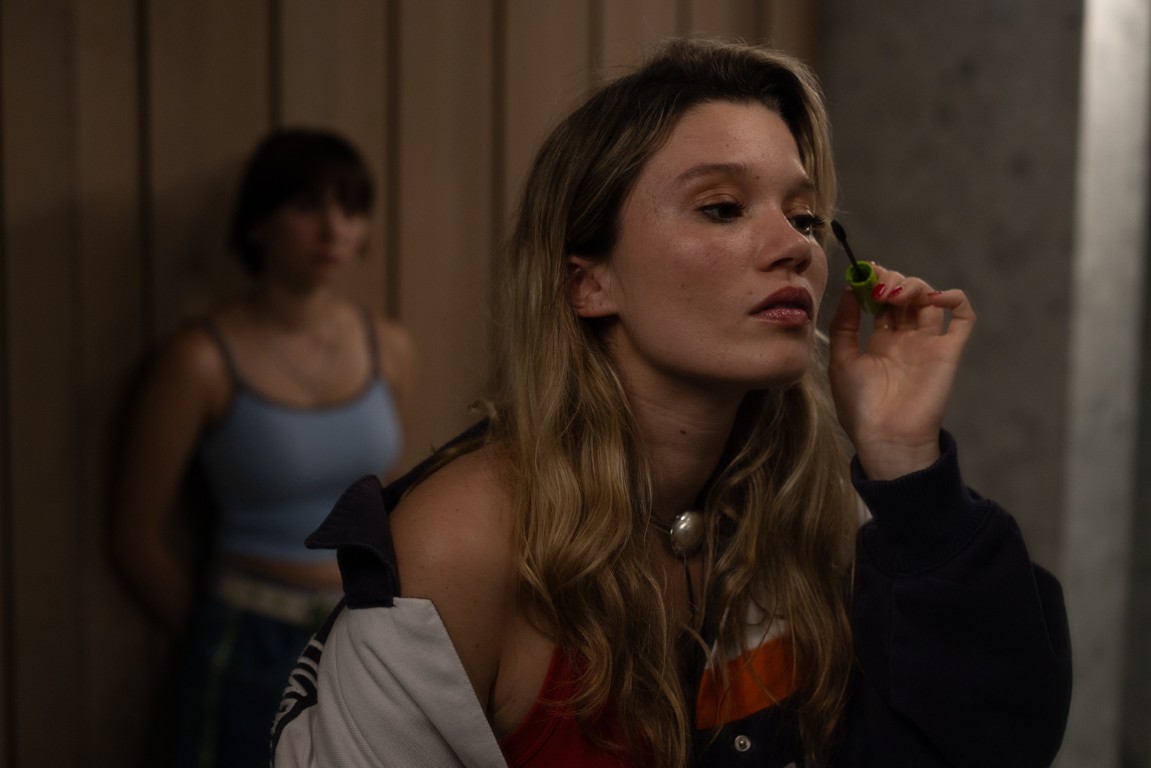
Then you have Rain Spencer, who was so great in “Good Girl Jane” a few years ago, as the exchange student Freya.
“Good Girl Jane” is such a great film, and she gives a great performance. Similarly, I think she’s in every scene in that film, and her performance has so many layers. So when you are making a film, you do your research. I was watching interviews and doing some snooping, and I thought that she just has a unique presence. She’s very grounded and down to earth, and that’s what I wanted Freya to be.
I didn’t want her to be a sex kitten or a girl next door. I like the idea of this girl who is so comfortable in her skin, and she’s a bit of a slacker and smokes pot, but also she listens to you, and when she gives you her attention, you feel like the only person in the room. I think Rain embodied that. Rain is so warm, even her voice. She’s got that low voice. It feels very earthy, and you feel safe around her. That’s what I felt our Freya character needed.
When we met over Zoom, we instantly felt like friends. She was so generous. She is so generous as an actor, so thoughtful. I don’t think she was the conventional choice for that character, but she did such a beautiful job.
Then you have Noah Taylor, who is Australian acting royalty, as Sid’s dad. How did he become involved with the project?
Noah Taylor was such an aha moment for me. I was told to write all the characters with love, and if I don’t love them, they’re gonna have a really hard time. So when I wrote the father character, I was like, okay, he needs to be funny, because humor does so much for winning people over and bringing levity. In the wrong hands, this film could be very dark, so I knew we needed something charming about him, but he also has complexity and intelligence. He’s not a deadbeat dad. He’s an artist, he’s smart, and he’s just lost his way a little bit, and I think we empathize with why. Any single parent is just doing their best.
So when I thought about Noah for this role, it just felt so obvious that he would bring so much nuance to this character. We had a Zoom, and we were instantly like locked in. He couldn’t come and rehearse as much as the others, so we sent each other letters: him and the character, complaints as the father character, complaints to the local police department, complaints to his neighbors. He was just so willing to play, which is everything I love in an actor. Being open to discovery.
It was great to have him on set as a very seasoned, almost father figure to us all on a crew. A lot of us on the crew and in the cast were quite green, and this was our first feature, so I think we really like came to appreciate the energy he brought on set
I’m really interested in the way you balance all the relationships in this film. Sid has her friend, her sister, Freya, her dad, and the girls she longs to be friends with. It’s a pretty complex first script to have your main character going through all these different relationships. Did you always imagine Sid’s social world being so big?
I always loved the idea of this girl in the middle of this web. I visualized her as a pinball. You remember that Windows 98 pinball game? You could play that or Minesweeper. Anyways, that was my visualizer of her journey at large. I loved this idea, but it also broke my heart. This girl goes anywhere that would have her for a moment, and then she gets batted away.
I think that is what it is to be a teenager, unless you’re really grounded and sure of yourself. You go where there’s a sniff of attention. So I knew we needed all these characters, and we needed to give them each their own life. I think in this kind of multi-character story, it’s really easy to write stereotypes so the audience can take it in and process that: that’s the main girl, that’s the asshole guy, etc. But it felt really important that each character had some context for their behavior.
I would say I loved all of them. Even Lana (Beatrix Rain Wolfe), who can be quite cruel, I empathized with her. And the dad as well, and even Freya, who’s maybe not perfect at the end. I think one of the cool boys probably has fewer redeeming qualities, but I also wanted to create a little understanding that they’re going through it too. Like everyone’s literally coming of age, trying to find out the right version of themselves.
I love the idea that sometimes you can be so lonely in company. Then you look at the difference between loneliness and solitude. I think at home, yes, Sid was lonely, but there was more solitude there. Whereas when she is the loneliest in that group of people, that’s a powerful image. For her, the grass is always greener, which aligns with this kind of summer-set New Year’s film. That time of year, you always have these fantasies. Even with love interests and being cool, things are often better left in fantasy because reality is never what you want it to be, but it’s probably what you need it to be.
Is there anything you hope people might take from this film when they’ve finished it?
Rain texted me when she watched the film for the first time, and she sent this really beautiful reply: “I think you’ve given me the gift of thinking about my younger self with a lot more compassion.” I don’t even mean just for millennials. Sometimes my favorite responses have been from parents who have come to the film. I hope people will be a little braver, give themselves more grace, and feel empowered to be more open. Also, after all these festival runs, I hope people go watch it in a cinema.
I think it’d be great to watch in the privacy of your own home as well, because it’s an intimate film, and sometimes you need that for the subject matter. But what you get when you watch with an audience, and the power of that collective experience, is something else.
My sound designer messaged me the other day. He watched the film up in Matakana, which is where we shot it. He was there with his mum, and he said he was watching it when a father and daughter sat a few feet away, and the father was quietly crying. So, I just hope people will be able to go and feel a little bit held by this thing, a little bit held and, like, hugged by it, even though it’s not an easy watch at all. But I hope it gives some levity and some good post-cinema discussion, because that’s why we love cinema. Go chew the fat afterward and figure out your own answers.
Obviously, we talked a bit about Jane Campion, but I wonder if any other women have made films that have inspired you?
So many. The first two that come to mind are Céline Sciamma and Eliza Hittman. I am so inspired by their bravery to talk about things, particularly around female desire, that have felt so taboo for so long. I’d credit those two for making me feel more comfortable with myself. All their films, like “It Felt Like Love,” “Beach Rats,” “Water Lilies,” and “Portrait of a Lady on Fire,” are incredible touchstones.
Obviously, yeah, Jane Campion. I watched “The Piano” the other day, and the mastery of tension and longing is incredibly inspiring. There’s also another New Zealand film from 2001 called “Rain.” I think our film has a lot more fun and humor, but in terms of its willingness to go to some quite risky and brave places, Christine Jeffs’ “Rain” is a real inspiration as a New Zealander.
There’s also Catherine Breillat’s “Fat Girl,” and Cheryl Dunye’s “The Watermelon Woman,” and so many others that may not be my experience, but still tell a subtly queer, ambiguous, fluid story. I’m enamored by those kinds of storytellers.
I just saw a restoration of one at TIFF, a Canadian film from 1996 called “Kissed” by Lynne Stopkewich. It’s about a girl who is fascinated with death and grows up to become a necrophiliac. But it’s not gross. It’s not a horror film. It’s deeply empathetic. It’s another film that is about female desire that doesn’t judge. It feels more transgressive than anything I’ve really seen in years, and it’s 30 years old.
I’ll definitely check that out. I think there must be a vault of these films, probably from the 1990s and 2000s, that were short-lived because they were busting open taboo discussions. Even Jane Campion’s “In the Cut” was called way too risqué and out there and got buried.
And now everyone knows it’s a masterpiece.
We need to hold a film festival with all these canceled films and remind everyone that women were prolific and these films are brilliant.
from Roger Ebert https://ift.tt/sBz7wEm
.png)


