
.png)
Even though people often love to point out this site’s namesake’s opinion on video games, since we began this coverage, we’ve tried to write about where the form intersects with film in cinematic franchises like “Silent Hill,” “Uncharted,” and “Resident Evil.” While playing the absolutely brilliant “Control Resonant,” I kept thinking of some of the most ambitious, game-changing science fiction films of all time, obvious influences like “The Matrix” and “Inception.”
But I also found myself pondering the work of David Lynch. How do “Twin Peaks” and Remedy Entertainment’s masterpiece intersect? It’s in a creator’s willingness to push boundaries, to use the visual language of dreams, and to find emotional grounding in the impossible. Creative Director Mikael Kasurinen has said via the review guide, “We wanted to make something that provokes. Something that feels like nothing you’ve played before.” Mission accomplished.
The excellent “Control” ended with hero Jesse Faden finding her brother Dylan, cleansing him of the infection by the all-powerful Hiss, and leaving him and the place known as The Oldest House under lockdown. Jesse became the Director of the FBC (Federal Bureau of Control) and promised to figure out a way to fix whatever had broken reality in New York City, allowing enemies from an extradimensional space to invade Gotham. Come to think of it: With its reality-shaking vision of Lovecraftian creatures that might literally be from Hell, “Control” has a bit of “Event Horizon” in its DNA, too.
Seven years after the Hiss invaded the Oldest House, Jesse wakes up Dylan and promptly disappears. Dylan becomes the hero of “Resonant,” which is one of many elements that give it a different aesthetic from its predecessor. One thing that takes a bit of getting used to is that this is not “Control 2” for a reason. It is a very different experience, trading the tight location work of the Oldest House for open-world gameplay with multiple zones and far more freedom of choice.
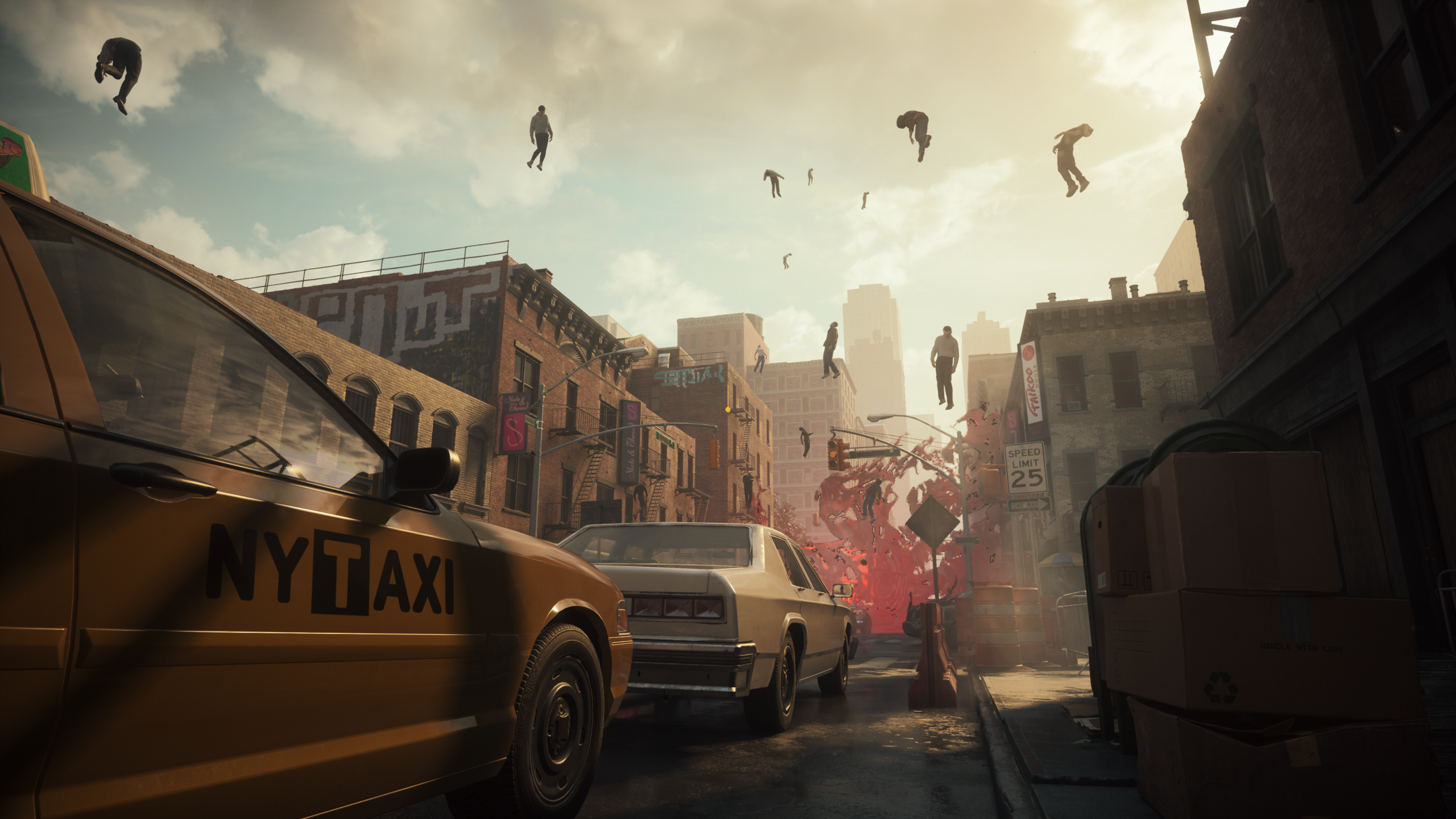
Early in “Resonant,” Dylan aligns with an FBC agent named Zoe de Vera, a companion who speaks to Dylan through the PS5 controller. You work with Zoe to figure out how an event called the “Patterning” has divided New York City from reality, leading to the invasion by thousands of creatures that want Dylan dead. As in many open-world games, you’re free to roam as Dylan, though the developers brilliantly layer in new powers for Faden that unlock new regions, combat approaches, and different enemies. The game balances wiping out packs of routine enemies, the occasional fight with a Resonant or boss, and alternating story and main missions.
The “Resonant” developers lean into significantly more RPG elements with Dylan than they did with Jesse. Skill trees, magical items, various weapons to choose for a loadout—it’s all deeply customizable. That said, combat works similarly no matter the angle you take. It’s mostly melee-based combat with a steady flow of strike-and-dodge mechanics, but you can also unlock special powers through game progress, including summoning allies to fight alongside you and hurling projectiles.
My first few hours with “Resonant” were mixed. It truly does require you to recalibrate expectations after the relatively linear first game. I found myself wandering New York City, unsure what to do and wondering why the story missions were kicking my ass. The answer is that this game doesn’t just encourage exploration; it requires it. You can’t push through only the story missions in “Resonant” because you won’t be strong enough. You need to complete side missions to level up and become strong enough to take on enemies like Resonants, but you also need to explore the city, wandering into places like laundromats and gyms to find upgrade resources.
After a couple of hours, “Resonant” kicks into gear and doesn’t look back. Several missions in this game rank among the best of the last several years, including one where you escape a sinkhole and one where Dylan plays with shadows of himself and a younger Jesse that are unquestionably moving. This game does things narratively that would terrify most writers’ rooms in games, TV, or film. The missions can be so wildly unpredictable—one minute you’re guiding a magical cat to fight a demon and the next you’re battling mold spore creatures that look like the kin of Bloaters from “The Last of Us.”
You can never quite tell where “Resonant” is going, which gives it the storytelling power of great film or television. It’s got enough authorial decisions through customization and exploration to make you feel like you’re in “Control,” but it also contains remarkably confident writing, not just in plot but dialogue and character work as well.
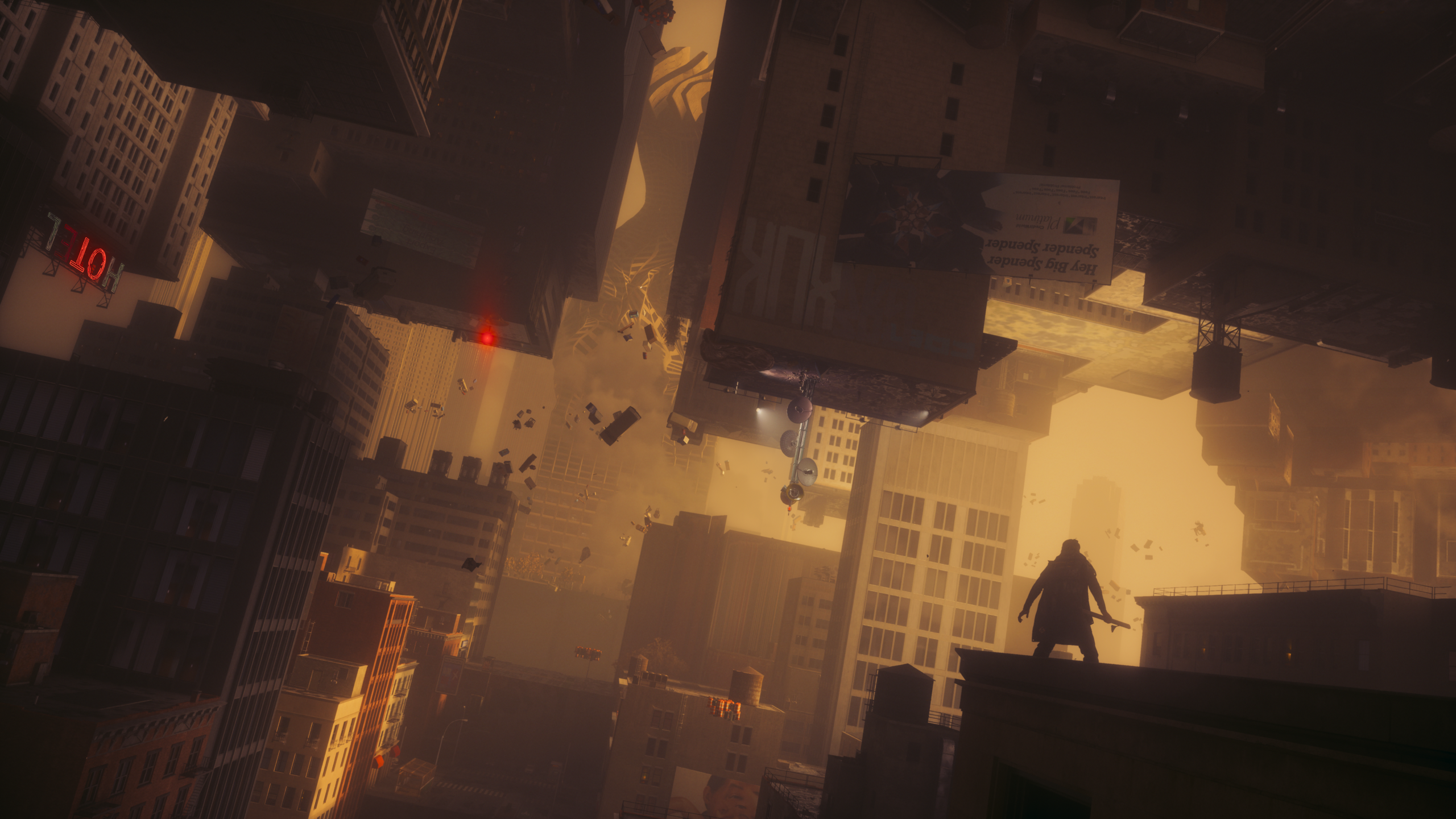
And then there’s the navigation. After a few clunky hours where even getting around NYC can feel tough, Dylan gains two powers: one that can pull him to points on buildings above him, and one that can basically turn the entire world on its axis. You know that scene in “Inception” wherein Elliot Page’s character flips the city on itself and they “walk up” a street?
Now imagine that in gameplay. While it sounds almost impossibly disorienting, the developers use it in just the right places, allowing Dylan to control not just through superpowered combat but by shifting the entire world around him. It leads to some of the most stunning level design in years, especially late in the game when the entire setting becomes pliable.
What Remedy Entertainment is doing with the “Alan Wake” and “Control” games is unlike anything else on the market. They’re accomplishing what so many great artists have done: Pushing back against the rules and expectations put on their form by so many years of conforming creators. We can argue all day about the definitions of art, but the ambition in “Control Resonant” is a sibling of what we so often look for in literature, film, or theatre, too. It’s that charge we all get when we can tell something is working in a way we haven’t really experienced before. Maybe more than any game this year, “Resonant” has it.
The Publisher provided a review copy of this title. It is now available on PS5, Xbox Series, and Windows.
from Roger Ebert https://ift.tt/KvhAGYb
.png)


