
.png)
Three of our best working filmmakers have new films on the fest circuit, and they all made the journey north to Canada this year to premiere them in Toronto. The very good news is that they all work, to varying degrees, and one is even among the best films you’ll see in 2026.
The standout is Mike Leigh’s devastating and beautiful “Tender Loving Care,” a dramedy that looks like it might be the legendary British filmmaker’s last. The man behind “Naked,” “Secrets and Lies,” “Topsy-Turvy,” “Happy-Go-Lucky,” and many more has been one of the most consistent directors we have for decades, and he has delivered a truly beautiful swan song, a movie that works as both a character study and a commentary on his entire career.
Most of all, it’s a film that reflects his deep humanism. Leigh understands people—how they move, think, and speak—as well as anyone, and he has poured that desire to find truth in his fellow man into this story about arguably one of the most important things you can do: Be present for someone else. It’s not about active empathy as much as it’s about just being there: Laughing, crying, feeling, and even just sitting in silence. Sometimes that’s all we can do, and all other people need. Mike Leigh’s films often feel like they find the extraordinary in ordinary lives. This is one of his best.
Kate O’Flynn (doing such a different register from her work on “Widow’s Bay“) stars as Amy, a social worker who works to protect young people, sometimes from themselves, and sometimes from their parents. She’s partnered with her best friend Rosie (Alice Bailey Johnson), a social worker who deals with the needy at the other end of life, assisting with the elderly as much as she possibly can. They’re both often pushed away by the people they encounter, whether it’s a mother fighting for custody of her kid or a woman who appears to be a hoarder and screams about her neighbor through a mostly-closed door. These scenes clearly followed Leigh’s unique process, one that isn’t improvisational as much as workshopped: The actors work with Leigh to find the right lines and beats within the construct of the plot. These clients may feel like narrative tangents, but they are essential to the fabric of the piece and the understanding that Amy and Rosie know how to actively listen more than most people.
They also love to drink wine and joke around with each other. Amy has actually come home to crash with Rosie after her garbage boyfriend went back to his wife. They laugh about each other’s love lives—Rosie is dating a firefighter that’s never seen—in a manner that makes their friendship 100% believable. Rarely has female friendship been captured with more veracity. It truly feels like these women have known each other for years.
Like a lot of best friends, Rosie has also known Amy’s parents, played by Marion Bailey and Paul Jesson, both spectacular. At first, it almost feels like this is a film about their love. They joke, laugh, worry about Amy, and even dance together. Have they found the love and care that Amy and Rosie have as friends more than in their romantic lives?
This is not that movie, even if it’s a part of the fabric of Leigh’s quilt. Without spoiling, the final act of “Tender Loving Care” dips into something heartbreaking, but it never loses its buoyancy. It’s a reminder of the value of human decency, of love, and of care. It’s kind of all we have.
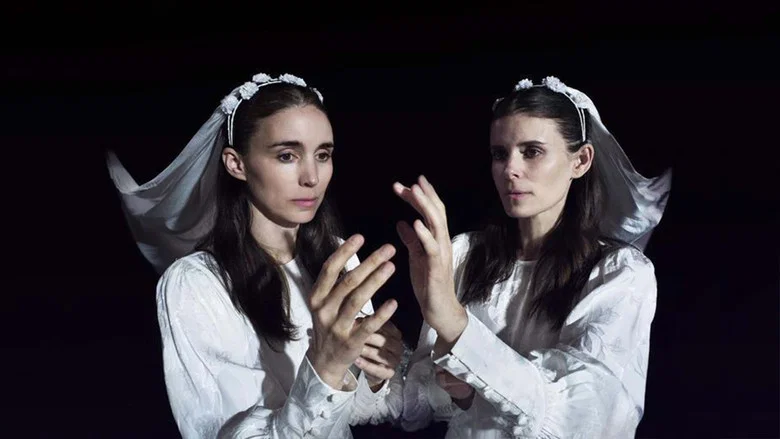
A much different experience awaits you in Werner Herzog’s first narrative film in years, the truly bonkers, even for Werner, “Bucking Fastard,” a film that opens with the words “For David Lynch” and then unfolds as a movie the deceased auteur would have almost certainly loved. Herzog’s interests are all up there on the screen in this surreal, trippy, funny, strange flick that’s truly hard to put into words. The first hour of “BF” is among Herzog’s best filmmaking, his fluid camera gliding across the story of a two sisters too strange for this world. Just as it feels like the themes are coalescing it takes a sharp turn and becomes something even stranger in the caves of Northern Ireland. Werner sure loves his caves. This section of the film gets almost as lost as the sisters, but the final shot really works, a sort of refusal to give viewers a concrete ending, letting them wander the tunnels of this world, rolling the movie’s questions around in their heads instead of providing easy answers.
Herzog takes inspiration for his fairy tale from the true story of Freda and Greta Chaplin, twin sisters who wore the same clothes and spoke at the same time. They also terrorized a man with whom they were obsessed, even testifying at a trial about their persistence, reportedly in unison. Herzog’s sisters aren’t twins, but they are played by real-life siblings Kate Mara and Rooney Mara, as Joanie and Jeannie Holbrooke. And his film opens at his version of the trial, where neighbor Gareth Mulroney (Orlando Bloom) seeks a restraining order. The trial sets the stage for the weirdness to come as the Mara sisters speak often simultaneously—same cadence, emphasis, and words—giving the film a dreamlike rhythm right from the beginning.
After lighting Gareth’s post box on fire so he can no longer receive love letters, a kindly neighbor sweeps up the girls and puts them up in an apartment, where he protects and watches over them. A man named Timothy (Domhnall Gleeson) tries to train them to separate enough to be able to vacuum and open a can of sardines, while their internet celebrity status continues to grow. The apartment section of “Bucking Fastard” is fantastic stuff, feeling almost like a parallel to the film’s prologue, one in which the sisters speak of a dream about birds, creatures that often move and chirp in unison. In a sense, the Holbrookes have been put in a birdcage, admired by the men outside and protected by their keepers.
Believe it or not, “Bucking Fastard” gets much, much weirder. Eventually, the girls find themselves chiseling away in a tunnel in a cave, trying to find a path to a place where they belong. Herzog has made several films about people who don’t fit in normal society, and this one seems to suggest that it is up to those people to carve their own path. It’s captured in one of my favorite lines of the year: “Everyone should dig a tunnel through a mountain.” It’s rich coming from the man who made “Fitzcarraldo,” but it’s also, somehow, remarkably inspiring.
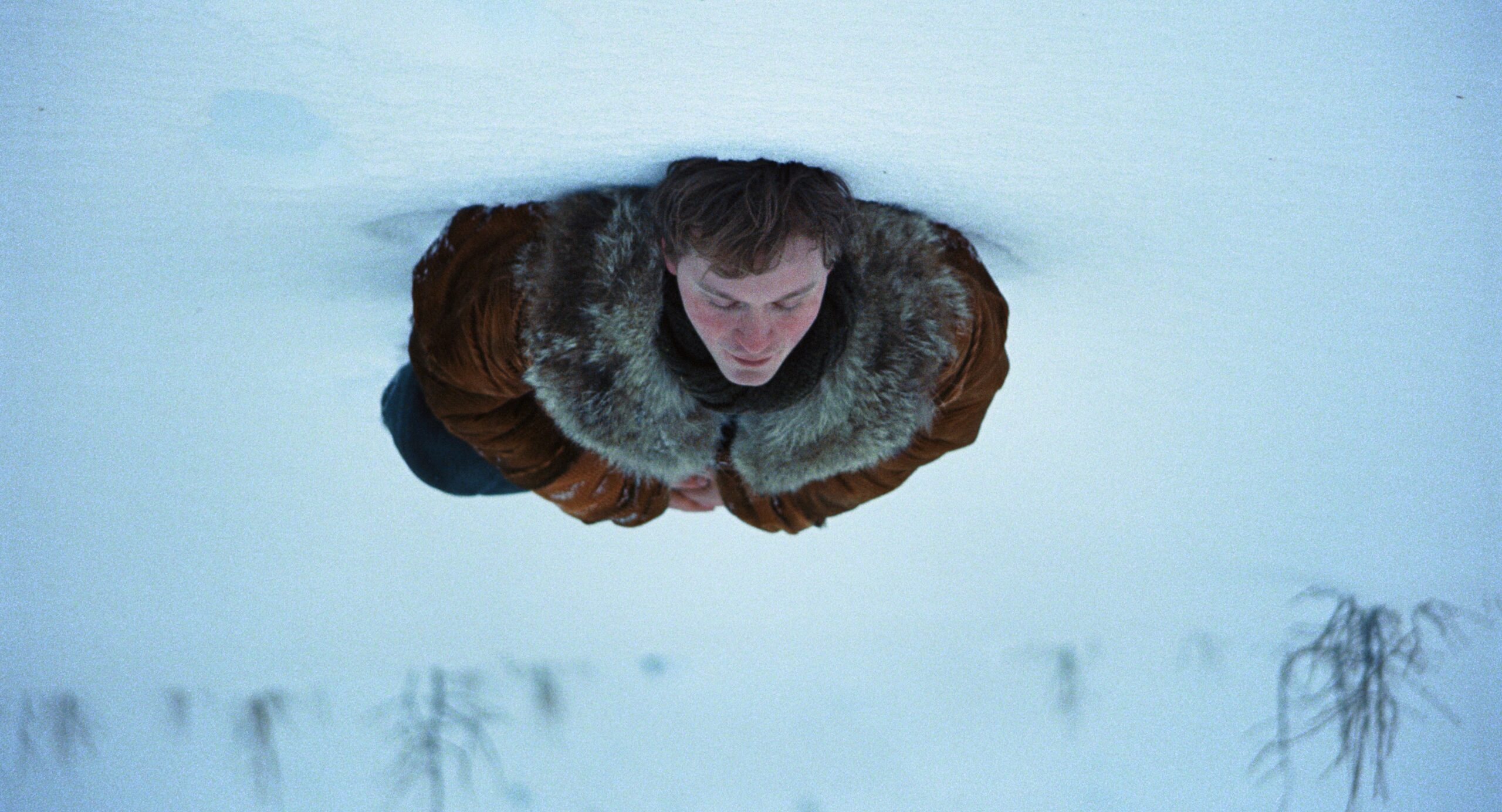
Finally, there’s the latest drama from the masterful director of “45 Years” and “All of Us Strangers.” Andrew Haigh never really makes the same movie twice, and yet all of his films, like Leigh, reflect a deep humanism, a desire to understand the complexity of people in a way that makes them feel genuine on-screen. His adaptation of a 2006 short story by Colm Toibin is so methodical that it can verge on feeling too slow, a pace that almost feels designed to capture the snowbound conditions in which it unfolds. You know how when you’re covered in snow gear and trudging up a hill that you don’t move at quite the same pace? There are parts of “A Long Winter” that verge on glacial, but strong performances and a truly moving final beat pull it all together.
Fred Hechinger does the best work of his career as Mike, who has returned home to his Colorado cabin in the ‘50s, just before his brother Tommy (Kit Connor) is leaving. He will be alone with a taciturn father (Ebon Moss-Bachrach) and troubled mother (Caitriona Balfe). Despite efforts to put on a brave face, it seems like mom is the kind of soul who has been fighting depression for years, stuck in a desolate place she never wanted to be in. When the family goes into town for supplies, she sneaks a drink or two, and hides wine around the house. When dad takes the booze away, mom literally walks out the front door, disappearing just before a snowstorm. Everyone searches for her, hoping she made it to shelter, possibly even her brother’s (Martin Freeman) house before the storm really made everything deadly, but it becomes increasingly likely that she simply disappeared into the snow.
“A Long Winter” becomes not so much a survival story or a mystery but a study in sustained melancholy. Mike walks the hills, hoping to stumble onto something that he knows is buried in the snow, and that he doesn’t really want to find. His father becomes increasingly petulant, refusing to do the basic things around the house that mom did before, and Haigh slowly makes it clear how suffocating this life must have been for his wife. It’s really a study of what happens when you take away someone’s only escape, even if it’s the deadly one of alcohol addiction.
Haigh really takes his time with a movie that moves at the pace of a winter search. Men trudge through the snow, and silence fills a cabin without a motherly presence. He directs Hechinger and Moss-Bacharach to do a great deal in the quiet beats. Mike is also hiding his sexual urges, first aimed at a local cop and then a young man who dad hires to do the cooking and cleaning around the house. He is figuring out who he is in this motherless scenario, turning “A Long Winter” into a study of manhood. Is the son who won’t give up on a doomed search less of a man than the father who seems to have moved on? And is the father who mocks and demeans both his only true ally in his son and the new young man in his house really any kind of role model? Can you blame anyone for choosing the wilderness over oppressive depression?
“A Long Winter” is also a gorgeously shot movie, as the snowy landscapes are alternately striking and foreboding. There are times when one feels the pace of Haigh’s approach more than most of his films as we plod through the snow with these increasingly depressed characters, but it makes for a film that’s more haunting and deliberate than it might have otherwise been. And it allows for the film’s stunning final shot to feel like more of a release, an escape from an unwanted life.
from Roger Ebert https://ift.tt/1BWkE5S
.png)


