
.png)
The 64th edition of the New York Film Festival strikes me as its strongest in ages. I have no doubt that many critics and festival observers will agree with this, and no doubt various theories will be adduced to explain it. I recently heard a critic friend opine that the long shadow of COVID has finally dissipated, and that the current NYFF, like Cannes, Venice and other 2026 festivals, reflects cinema returning to its pre-pandemic strength (an idea that doesn’t even account for the bounce provided by “The Odyssey” and YouTube-spawned hits like “Backrooms” and “Obsession”).
Personally, I don’t have any theory to explain why this year’s festival seems so strong, but I do have a way of measuring it. Film critics, as I’m sure you know, are nerds. And one very nerd-like thing we do throughout the year is to keep thinking of the 10-best list we’ll compile at year’s end. For decades now, I’ve realized that the New York Film Festival has dependably supplied at least half of the ten films that appear on my list. When you consider that the festival occupies only a small fraction of the year (a little over two weeks) and that its Main Slate usually contains roughly 30 films, that’s pretty amazing. And is obviously a credit to the discernment of the selection committees that have guided the festival’s choices over the years.
This year, over eight months of film viewing produced only three films that I felt were likely to have places on my 2026 list: Ross McElwee’s “Remake,” Patrick Wang’s “A. Rimbaud” and Daniel Raim’s “The Ozu Diaries”. (All are films I think should have played the NYFF. But that’s a perennial kind of complaint.)
Then I got to this year’s festival, which runs from September 25 to October 12, and three days of early press screenings produced what may well be the top half of my 2026 10-best. To wit:
- “Fjord“
- “Naza”
- “All of a Sudden“
- “Club Kid“
- “Minotaur“
You may have already heard that the top two films there share something: they are controversial. Very much so. I think that quality explains some of the excitement about this year’s festival, and is connected to what makes the films innovative, original and important. Though “Fjord” is a fictional drama and “Naza” a documentary (and that’s one reason it’s rather unfair to rank them, I admit), they are both, in a way, real-world horror films.

In “Fjord,” the horror lies in five kids being ripped from the care of their parents. No, this doesn’t happen in Ukraine, with the kids being shipped off to Vlad’s Russia. It happens in Norway and the family in question are not only immigrants from Romania, but they are also conservative Christians. At first. they are welcomed into the small coastal town where they land, but gradually suspicions arise about their imported values, including their parental practices; soon flimsy accusations of child abuse leads to the children (including a nursing newborn) being taken by the state and the parents entering a nightmarish legal quagmire.
Cristian Mungiu, the film’s writer-director, is Romanian and previously won Cannes’ top award, the Palme d’Or, for “4 Months, 3 Weeks and 2 Days.” “Fjord” took the same award this year, which puts him in the small company of filmmakers who’ve won it more than once. Clearly, he’s one of cinema’s masters. As I noted in reviewing his “Graduation,” he “employs a patented style that involves long takes (many scenes entail only a single shot) and eye-level widescreen compositions. The effect is of a crisp, unblinking intentness, one that induces the viewer to pay attention to the characters, their words and interactions….”
Though “Fjord” has all the brilliance of Mungiu’s best previous films, including top-notch performances by Renate Reinsve and Romania-born Sebastian Stan as the parents, its win at Cannes inspired a dark chorus of grumbling, as a friend covering the festival wrote to me. Its presumed sin is to take what’s regarded as a right-wing position on the well-intended ministrations of a liberal, supposedly enlightened Western state. To me, this is a very parochial (but very American, I think) view, one that ignores how exactingly Mungiu has previously X-rayed the lingering baneful effects of Communism in Romania. In any case, readers should be advised that, querulous reviews aside, the extraordinary “Fjord” deserves to be seen.
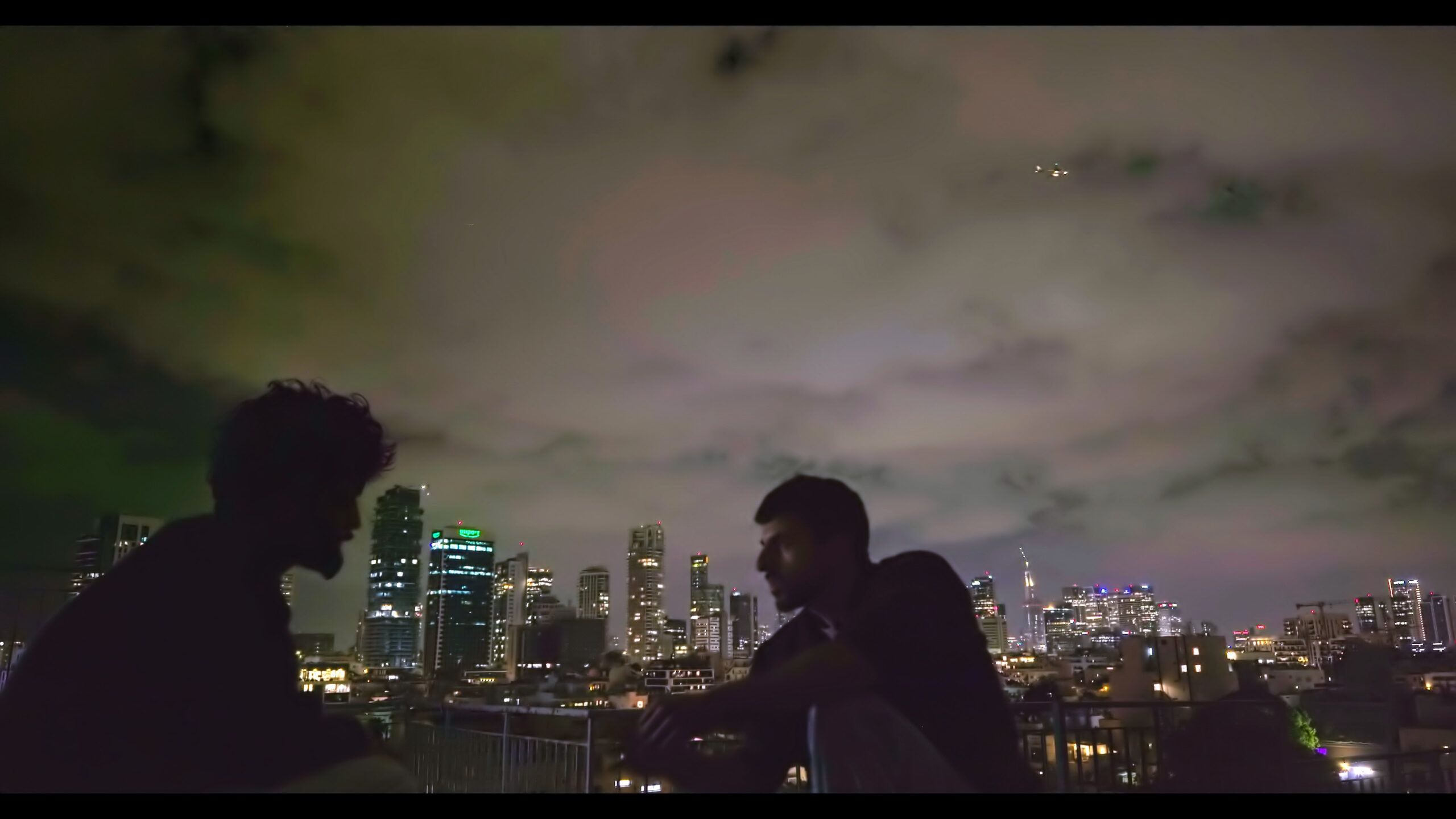
In “Naza,” the horror lies in the genocide in Gaza as described by two dozen Israeli intelligence operatives and soldiers who administered it. Made in secret over three years by Israeli filmmakers Yuval Abraham and Rachel Szor, half of the team that made the Oscar winning “No Other Land,” the film surfaced on Sept. 10 at the Venice Film Festival, where it won a 25-minute standing ovation. That acclaim almost instantly sparked worldwide headlines, and in Israel caused what one newspaper called “Naza hysteria,” with the Netanyahu regime signaling its desire to strip the filmmakers of their citizenship.
The film shows Abraham sitting on a Tel Aviv rooftop at night, facing his interviewees, whose faces and voices are digitally altered to protect their identities (their testimonies have thus been questioned by critics of the film, though The Guardian, one of its producers, says it has vetted them). What they describe is Israel’s high-tech method of killing over 70,000 Palestinians in the last three years: it seems that virtually all of Gaza is under electronic surveillance, so that once a reputed Hamas member is identified in his home, the building is bombed, usually with everyone in it killed. (“Naza” is shorthand for collateral damage.) Hardly any of these elite members of Israel’s military voice any compunction about the mass slaughter of so many innocents, though one man says that when he visited Poland, he wondered how the Germans who committed the Holocaust could live with themselves. Now he knows.
I came out of the film shaken, as I’m sure many will. I can only recall one comparable incident at the NYFF: the effect of Laura Poitras’ “Citizenfour” was similarly electrifying to me. Both films were subject to high security by the same company prior to their first screenings (at “Naza,” members of the press were asked to surrender their phones before going into the theater). I saw the head of that company before the screening and, mindful that films like “No Other Land” and “The Voice of Hind Rajab” did not get theatrical distribution in the US, asked if there was any chance “Naza” would get a distributor. “It already has one,” he said.
Unless I miss my guess, “Naza” will end up being not just greatly acclaimed but historic, with a greater impact on public perceptions and events than any previous movie. After its first public screening at the NYFF tomorrow, it will open at the IFC Center in New York on Sept. 30, then roll out to much of the rest of the US on Oct. 9. On the morning that I write this, it was announced that the film will be available online for free in 50 countries beginning in November.

As for the other the other three movies on my top five:
“All of a Sudden”: Made in France by the great Japanese director Ryusuke Hamaguchi (Drive My Car), this lyrical masterpiece hinges on the brilliant work of actresses Virginie Efira and Tao Okamoto in a story about eldercare, empathy and performance.
“Club Kid”: Caregiving is also the central theme in this terrific comedy by writer-director-star Jordan Firstman; it’s about a coked-out gay party giver who’s surprised by a tyke he didn’t know he fathered years before. Hilarious and moving.
“Minotaur”: Though he was obliged to leave Putin’s Russia, the latest by Russian master Andrey Zvyagintsev (Leviathan) ponders the spiritual and social corruption of that country during its war on Ukraine in this chilly, gripping thriller about marriage and murder.
As noted, the five films discussed above represent only a portion of films screened for the press at the NYFF thus far. Is it possible that future screenings may provide more candidates for my evolving 10-best? I’d say it’s not only possible but likely, obliging the critic to deal with the welcome challenge of an unusually rich and varied cinema year.
That likelihood is bolstered by the fact that I haven’t seen any of the festival’s world premieres, which in 2026 are in greater number than is usually the case, a factor widely seen as contributing to the festival’s overall strength this year.
While the NYFF, unlike many festivals, doesn’t put a premium on world premieres, it often features them in its three prestige slots: Opening Night, Centerpiece and Closing Night.
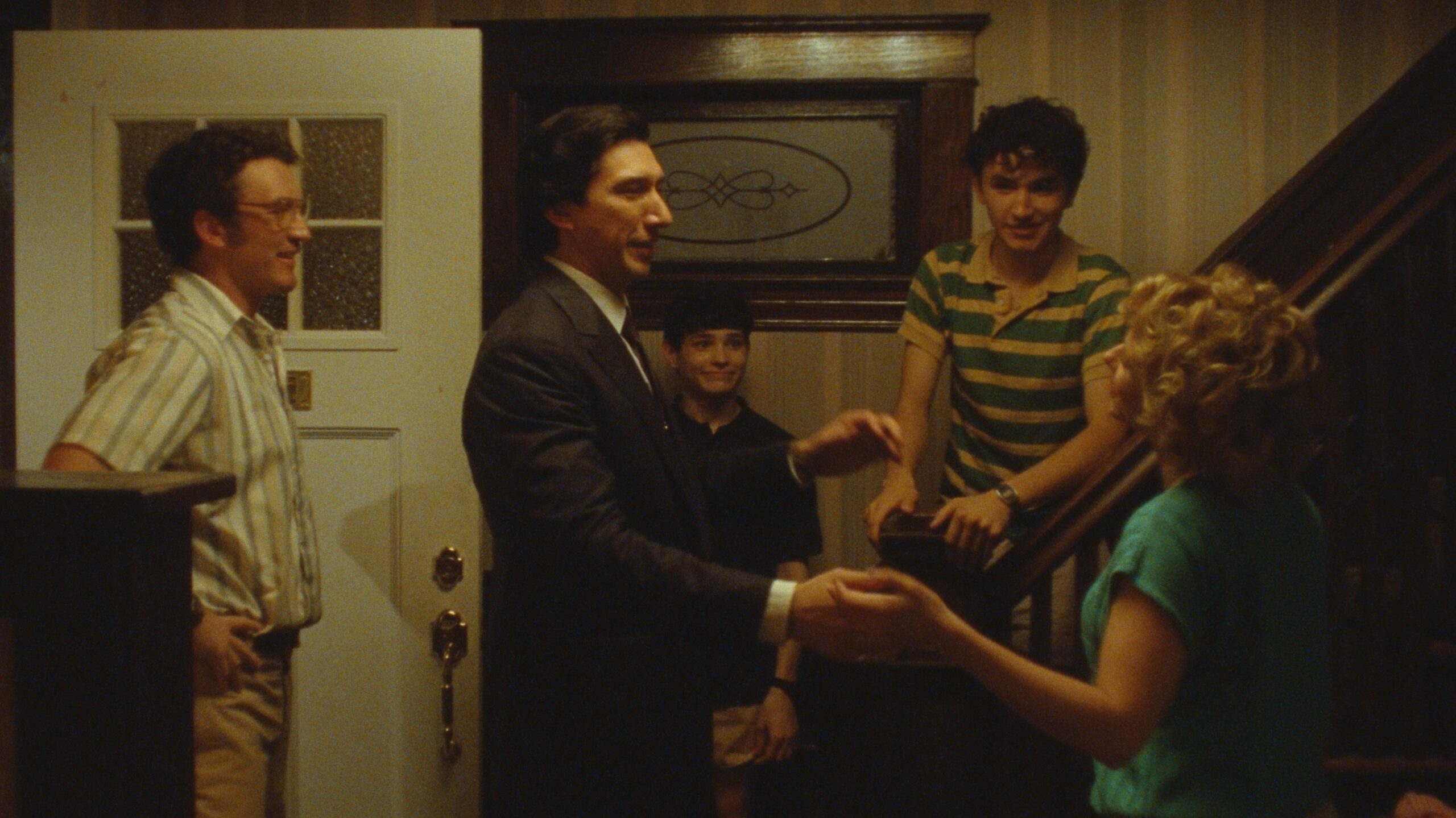
Opening Night this year belongs to James Gray’s “Paper Tiger,” a crime drama about an American family that gets mixed up with the Russian mob, starring Adam Driver, Miles Teller and Scarlett Johansson. Since most of Gray’s films are set in NYC, and many have played the NYFF, it’s fitting that one finally gets the Opening Night slot. It opens theatrically in November.
The festival’s Centerpiece, meanwhile, is “Behemoth!” by writer-director Tony Gilroy (Michael Clayton). It stars Pedro Pascal as a renowned cellist returning to Los Angeles to write a film score. Opens in December.
I’m particularly looking forward to the Closing Night selection, Ava DuVernay’s “14th,” a title referring to America’s 14th Amendment. A documentary featuring interviews with a wide range of experts, it’s a companion piece to DuVernay’s “13th,” which I named the best film of 2016. It plays Netflix beginning in December.
Among the other world premieres, the one that tops my must-see list is “Artificial” by Luca Guadagnino, whose “After the Hunt” opened the festival last year. The year’s one big release dealing with the hot topic of A.I., it stars Andrew Garfield as OpenAI CEO Sam Altman. It already stirred notoriety by being dropped by Amazon MGM earlier this year; it was subsequently picked up by NEON for a Christmas release.
Also on the electic world premiere docket: Takashi Yamakazi’s “Godzilla Minus Zero,” the 39th (and first R-rated) entry in the beloved Godzilla franchise; Tom McCarthy’s “A Statement,” a provocative dramedy about experts trying to draft a congressional statement about climate change; and the marquee-busting title “I Deserve a Lover Whose Every Rise Sets Fiery Dooms Raging Across the Skies,” a documentary by noted Iranian director Mani Haghighi about two eccentric archivists in the city of Tabriz.
from Roger Ebert https://ift.tt/wTWOyku
.png)


