
.png)
The premise of the Glen Powell vehicle “Chad Powers” is ridiculous and doesn’t get any less so in season two. This is still a show about Russ Holliday, an epic flame-out of a quarterback, and his attempt to regain the spotlight as his wig- and prosthetics-powered alter ego, Chad Powers.
Yes, in season two, assistant coach, coach’s daughter, and Chad/Russ’s love interest Ricky Hudson (Perry Mattfeld) knows about the deception. And the central conflict is less about whether Russ can pull it off (although the tension of getting caught still hangs over everything) and more about what trouble backup QB Gerry (Colton Ryan) can stir up as his envy and suspicion of Chad grow.
Which is to say season two is remarkably like season one, same tone, same conflicts, same humor—with only the smallest of adjustments. The first episode feels like it could have been plucked from the middle of the first installment, extending the flavor of the Hulu series, if not doing much for the plot.
Thankfully, the pace picks up after that. Fans of the show shouldn’t worry—this season finale doesn’t blow up the premise, but rather swaps one antagonist for another. “Chad Powers” isn’t a show like “The Good Place,” reworking its set-up at each break. It’s more of the same.
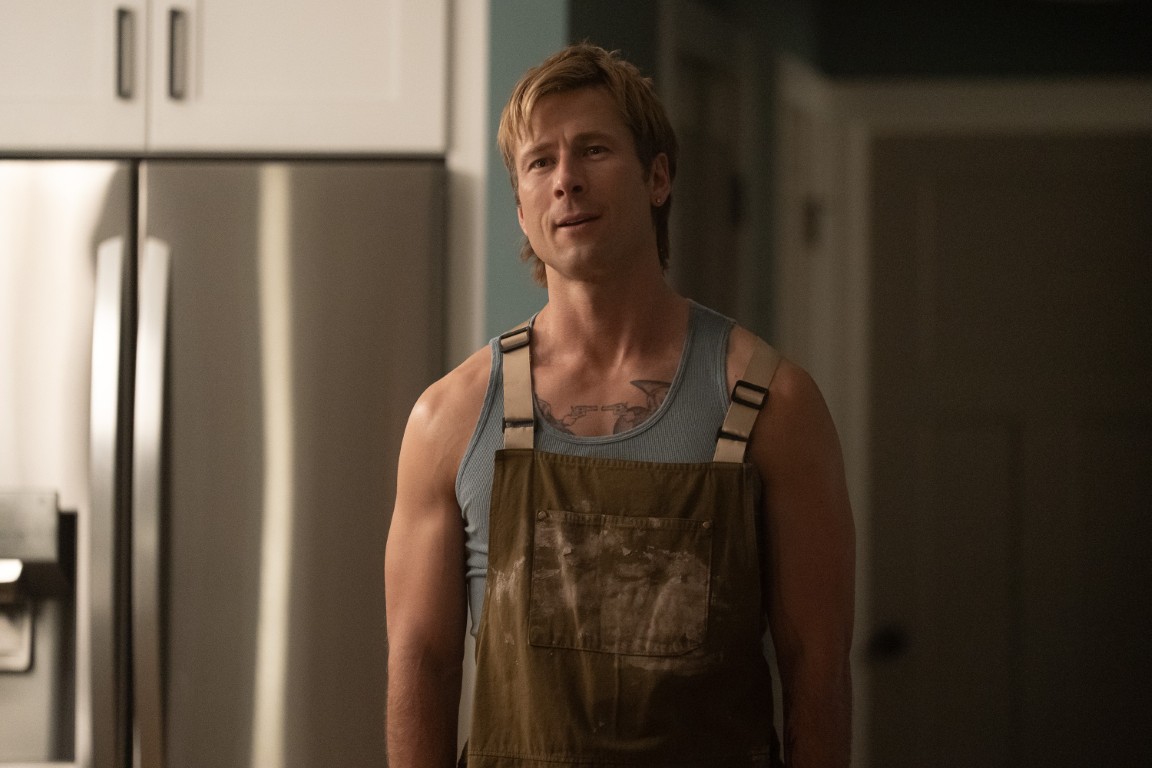
The same, and just as good, if not a little bit better, in round two. For one, the second season is funnier; there’s a bit with Russ’s dad (Toby Huss) in the “10th Quarter,” as the episodes are called, that is laugh-out-loud funny. Here, the jokes compound through a set piece that goes from jump-scare to hilarity to heart.
Friend and accomplice Danny (Frankie A. Rodriguez) gets more character development this season. And it’s good to see Danny as an empowered version of the overly used gay sidekick: this is college, after all, and he’s not taking any of the bullying common on high-school shows. But it’s also frustrating that while multiple characters allude to his sexuality, we still don’t get to see him so much as make eyes at a love interest. In a show with countless poop jokes, surely some gay flirting wouldn’t be too grotesque, no?
And of course, Powell’s charisma remains radiant. As wounded, asshole Russ, he’s handsome and terrible, continuing with his bad fashion and political choices, even as his search for real connection only grows stronger. As Russ-as-Chad, he’s awkward and nonsensical, but shares the same aching vulnerability. And it’s his journey that makes the show not just watchable but delightful, emphasizing the rewards of kindness and relationships amid off-the-rails kookiness.
The silly does take up a lot of space, though. Powell’s ability to deliver Russ’s bananas improvisations continues the comic relief even as the idea that Russ could maintain the ruse gets more improbable the longer the show goes on. How did they solve the helmet-wig issue of season one? What about the showers? The habitual, practical problems mostly fade in season two, although the gags with the prosthetics continue, including a game of misplaced nose that spans the entire stadium.
But even if Russ can figure out how to keep his costume on physically, how does he do it emotionally? Can a person really change their behavior so completely and so dramatically? It’s perhaps believable that Russ could do it on the football field, where there’s less talking anyway. But what about class? Like its predecessor, season two doesn’t venture into a lecture hall or laboratory. The closest we get is the cafeteria, and one college party—and both scenes reveal just how ludicrous the whole premise is.
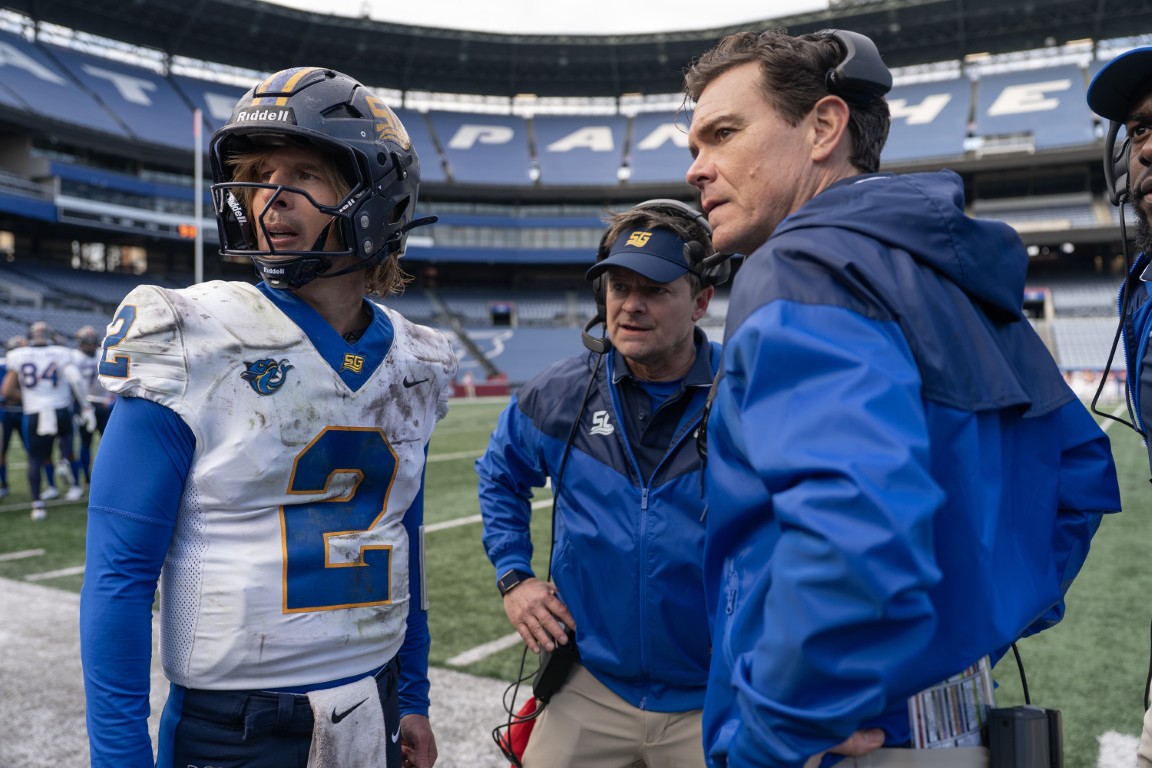
And yet, it is nice watching a grade-A jerk learn to be, if not a good person, then at least a better one. Russ wants to play college football again, not just because he’s good at it, but because it’s the last place he felt loved. And his ability to form real relationships with Danny, Coach Hudson (Senior), and Ricky powers his evolution. He’s learning a whole different reward system than the one he existed in as Russ, moving from self-absorption to genuinely caring for other people.
That it’s all built on a set of lies that must, at some point, come tumbling down makes his evolution that much more poignant. Is his progress real? Will it withstand the storm ahead? It’s unclear, but it’s obvious showrunner Michael Waldron (working from a stunt by Eli Manning) has got the audience firmly on its lead’s side, despite all of his misdeeds.
In that way, the audience is in Ricky’s shoes, knowing better but still falling for this ridiculous character and his show. She’s often the voice of reason, trying to bring in a dose of reality in the sideways world she finds herself in, usually to no avail. Now in on the deception, she makes a series of wildly unrealistic decisions, including risking her career for the liar. Her willingness to do so only makes sense because: A. it keeps the show running and B. Glen Powell is such a force. In that, she’s like so many other TV heroines, defined by making a bad choice for the guy, over and over again.
Yet, with Mattfeld’s piercing eyes and lanky physicality, Ricky reminds us that it’s easy to be enamored with “Chad Powers.” No, it doesn’t make any sense. But rehabilitating a selfish failure who’s finally ready to change feels so good. It’s enough to make audiences and assistant coaches do some strange things, like heartily enjoy this show despite all its improbability.
Six episodes screened for review. Premieres on Hulu September 3rd.
from Roger Ebert https://ift.tt/SpdgNzj
.png)


