
.png)
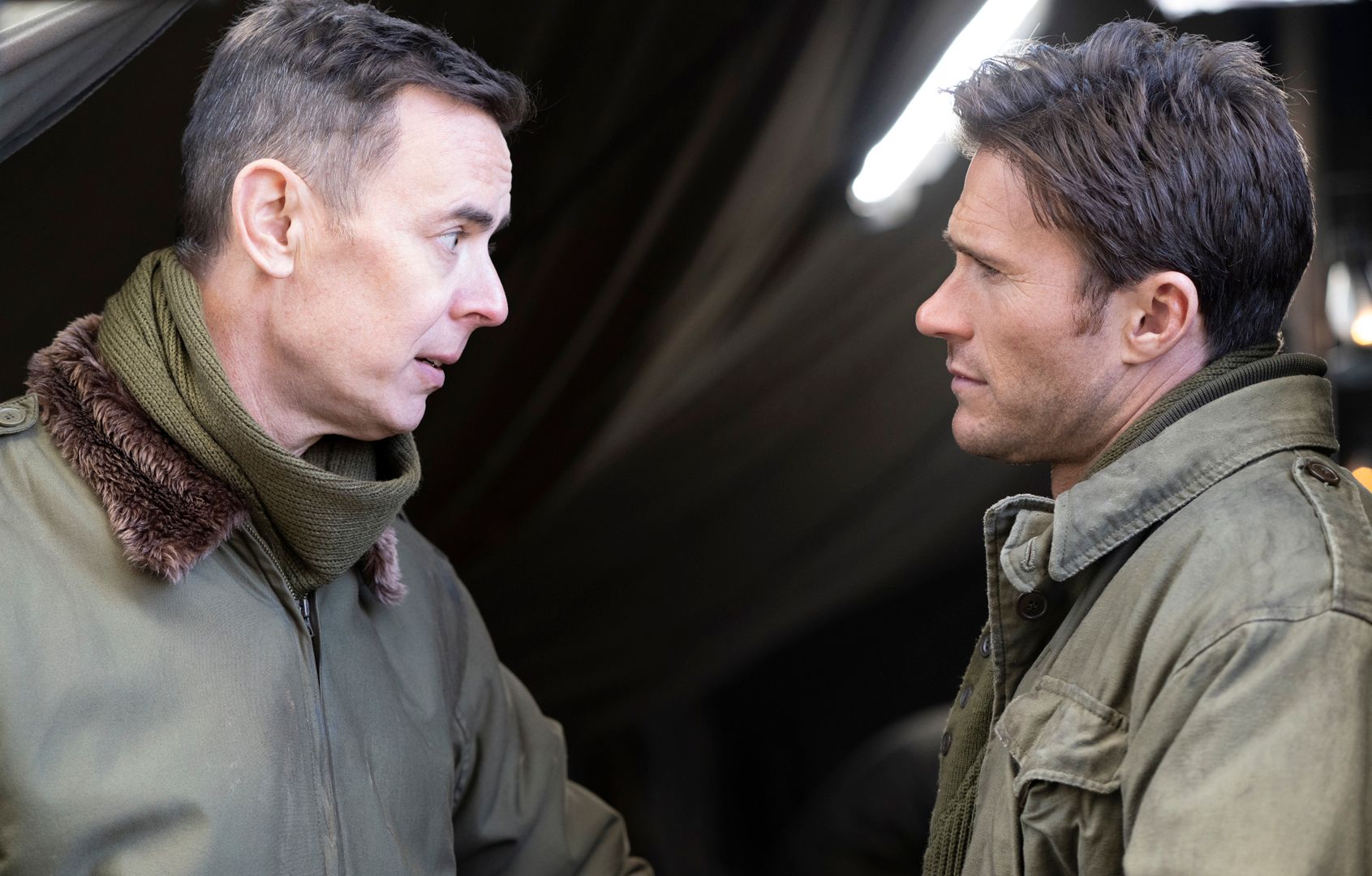
“Lucky Strike” is based on the true story of an American soldier wounded behind enemy lines in WWII, during the massive, weeks-long Battle of the Bulge, in December of 1944. Scott Eastwood plays Colonel John Castle, who relies on the then-new technology of a backpack-sized radio that allows him to communicate with his division.
In an interview with RogerEbert.com, director and co-screenwriter Rod Lurie discusses keeping the audience within Castle’s point of view, the film’s three distinct color palettes, and how his wife helped cast a key role.
Talk to me about the cinematography [by Lorenzo Senatore], which is absolutely gorgeous and is so effective at bringing us into that time and place.
Lorenzo Senatore and I talked about it a lot. There are three looks in the film, three distinct color palettes. There’s black and white in the beginning. And then we’re in America, where Scott is meeting with a woman, at the end. Then there is the bulk of the movie, which is in the Battle of the Bulge. Obviously, black and white is its own thing in that first scene. Then I wanted the scene in America to be very bright and vibrant.
But I wanted to get a sense of the cold and the battlefield’s upsetting nature throughout that entire Bulge section. And I was very influenced by the cinematography of a man named Pierre Lhomme, who photographed a movie called “Army of Shadows,” Jean-Pierre Melville’s film. And it’s sort of the same palette that Janusz Kaminski used on “Saving Private Ryan.” Ours is a little bit more lush, I would say.
And I’ve always challenged my DPs to do something that camera movement-wise or composition-wise, that they have never done before. And Lorenzo said, “Ridiculous, I have done everything.” And I said, “No, that’s bullshit. You haven’t done everything.” I said it to him on “The Outpost” as well. And we came up with some stuff there that, to this day, people ask us how we pulled it off.
I challenged him a couple of times here as well. We came up with ideas for some oners that seemed almost impossible. Like, Scott takes out a bunch of Nazis in a farmhouse and runs outside. And we follow him, and then somehow, we follow him into a tank, all in one shot. Lorenzo would say, “This cannot be done.” And then I would say to him, “Except you.” And he goes, “I am going to try.“ And so he pulls out this magician stuff that’s really just amazing. It’s really just amazing. I love his work in this film, and I love cinematography.
The oners are so immediate and visceral.
When you can put that into a combat situation, then you really do create a first-person point of view. It was very important that this movie be Scott’s or Castle’s point of view. We tried, except in the opening section, which was very much meant to be objective, to really stay in his point of view. When we see him in conversation, we never see over his shoulder because we see what he sees, for example. And when he hears a language that he does not understand, like French or German, we didn’t give subtitles, because why should the audience understand something that he does not?
Your background at West Point and in the military lends this film a lot of authenticity, as it did in “The Outpost.” Are you from a military family?
My dad was in the Israeli military and quite a hero there, but not in the American military. I went to West Point for many reasons. My first choice was Columbia. I wanted to go to the School of Journalism, but I didn’t get in there. My number-two choice, and very, very, very high, was West Point. First of all, it’s the best school in the world. If you look at the academics at an undergraduate school, they have tons of PhDs and tons of Rhodes Scholars. Edwin Teller was one of my professors, and he’s a physicist.
It was pretty amazing being there. You didn’t have to pay to go there. You got paid. I did want to serve the country. But really, I wanted to become a filmmaker. I didn’t want to go to film school to learn things that you’re going to learn on sets. What I wanted to do was go and study the things that I wanted to make movies about. I studied leadership, principles, American history, and the military. And whenever I walked around that beautiful campus, I would always ask myself the same question: “Where would I put the camera?”
They haven’t allowed a full feature film to be made on the campus there in 75 years. It’s very difficult to get approved. It’s really the jewel of the Army. But I got it approved for a boxing film a few years ago. Right. And I got approved by Lionsgate and West Point, and then my father got sick, and I had to take care of him. And I just couldn’t take the time to make a movie at that point.
I was surprised to find you credited as a composer for the film.
I came up with the opening melody, the melody that runs throughout the film. However, all the rest of the music, all the tonal stuff in the film, comes from Larry Groupe, who has been my lifelong, career-long composer. I don’t want to credit grab too much. I did write the song at the end. I have done that for several films.
The score is very powerful. In the scene where Castle ends up in the tank, it’s very intense.
That was Larry, and there are these pizzicatos and sliders throughout the film that are also him. He’s a marvelous composer. The Outpost, he did some great electronic work. He did some wonderful tonal stuff there as well. It’s interesting that there has been a shift away from melody in movies and movie scores. And I think that really started to become very in vogue with the movie “Sicario,” where it’s basically all tonal or even in “The Revenant,” and movies like that. Nobody can hum them anymore.
I was very pleased to see one of my favorite actresses, Aunjanue Ellis-Taylor, in the film.
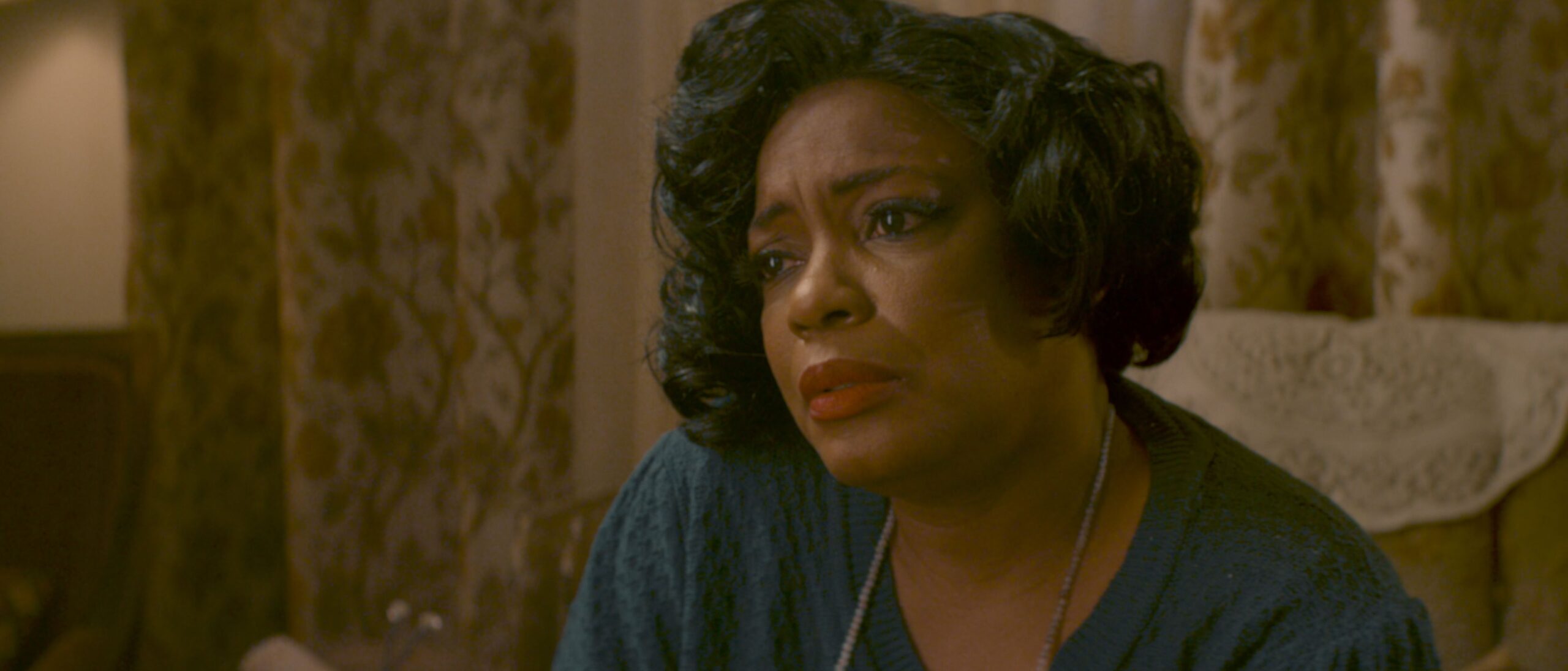
In the story that my partner Mark Friedman was told, which became the basis for this movie, our hero does go back to find the woman who made the radio that saved his life. We needed to get a very powerful African-American actress. My wife, Kyra Davis Lurie, is Black. She turned on “Lovecraft Country” and said, “Watch this.” And I did. She said, “That’s it.” And I said, “You bet.” I only had one day with her, but we’ve already talked about doing more stuff together. She’s a bit of a miracle of an actress.
It was wonderful to see the premiere at the National Archives. Why was that so meaningful for you?
It should be self-evident that for a director who is a veteran, who’s making a movie about World War II, which really put America on its best display, how much it means to be offered to screen your movie at the National Archives, where, when you walk out of the theater, the Declaration of Independence is right there. It is the honor of an absolute lifetime. Nothing I will ever do, screening-wise, will match that. The fact that these people saw our film as worthy, that we had their 107-year-old commander from the Battle of the Bulge, Herb Stern. Afterward, he held my hand and said, “You got it right.” I’m taking that to the bank now.
It’s hard for us today to realize how revolutionary the communications technology was in 1944.
It gave them the ability to communicate instantaneously from one unit to another. Asking for cover fire or just knowing where their friends were was completely and utterly essential. And the 300 series was extremely sturdy. It could transmit up to 13 kilometers. And in a place like the Battle of the Bulge, which is very condensed, something like that was very important. And of course, it was a miracle for people like Scott’s character who are trapped behind enemy lines. Just to be given the ability to at least know where your unit is changed the course of the war and warfare period.
I was very touched near the end of the film, when we see a child who shares your late son’s name.
My son died of a blood clot right in front of my eyes while I was making “The Outpost.” And I look back today, and I don’t know how I got through it. And well, I do know how I got through it. I got through it through the art that we make and the sense that we can have purpose. Before he died, I promised him that I would only do things that carried some meaning. And this is the stuff that means the most to me right now.
from Roger Ebert https://ift.tt/hcwMpX9
.png)


