
.png)
Some lives become so woven into the fabric of our culture that we experience their influence long before we ever learn their name. For generations of Black Americans, George E. Johnson, Sr., was one of those people. I am one of the privileged many to have called him a friend. Founder of the Johnson Products Company with his late wife Joan, and one of the great architects of Black enterprise in America, George passed away on July 6th at the age of 99. His passing marks the end of an extraordinary life, but his legacy reaches far beyond the shelves where Afro Sheen and Ultra Sheen once stood. It lives in the confidence of generations of Black entrepreneurs, in the celebration of Black beauty, and in the cultural institutions that flourished because he believed they deserved to exist.
I look forward to celebrating George’s legacy with his loved ones and friends this week. The visitation for him will be held from 4pm to 8pm on Thursday, July 16th, at Leak and Sons Funeral Home, 7838 S. Cottage Grove Ave., followed the next day by his funeral at 11am at Trinity United Church of Christ, 400 W. 95th Street. The funeral service will be livestreamed at trinitychicago.org. In lieu of flowers, the family asks that donations be made to Chicago State University (http://www.csu.edu/) and/or The HistoryMakers (http://www.historymakers.org).

Even though we will be attending a Memorial Service, my memories of Mr. Johnson through the years, are of how lively, gentlemanly and sharp he was about business, human relationships and life itself! That includes earlier this year where we hosted him and his wife Madeline at the Palm Springs International Film Festival Gala in California. He was so pleased that he had finally published his memoir a year earlier (at age 97!). He said that the Lord whispered to him that it was time to tell his story. He connected with the writer Hilary Beard and the result was the entertaining book: Afro Sheen: How I Revolutionized an Industry with the Golden Rule, from Soul Train to Wall Street.
His book is an inspiration and a blueprint for making your dreams come true by having faith in yourself, in Black entrepreneurship and he emphasizes, by following the Golden Rule. It was his firm belief that we should treat others as we want to be treated. I sensed that his pleasure in telling his story was not to bring glory or attention to himself, but to encourage others to follow their dreams. And indeed, at the stops along his book tour that I attended, I noted that among the attendees were a good many successful men and women who attributed their success to encouragement (and seed money) from him.
It’s worth noting that several successful Black families in Chicago had the last name of Johnson, which at one time caused some confusion. There were the Ebony/Jet magazine publishers John and Eunice Johnson, and leading Cadillac dealer Al Johnson, among others. Yet George’s near-century of achievements will stand as a singular beacon of inspiration for generations to come.
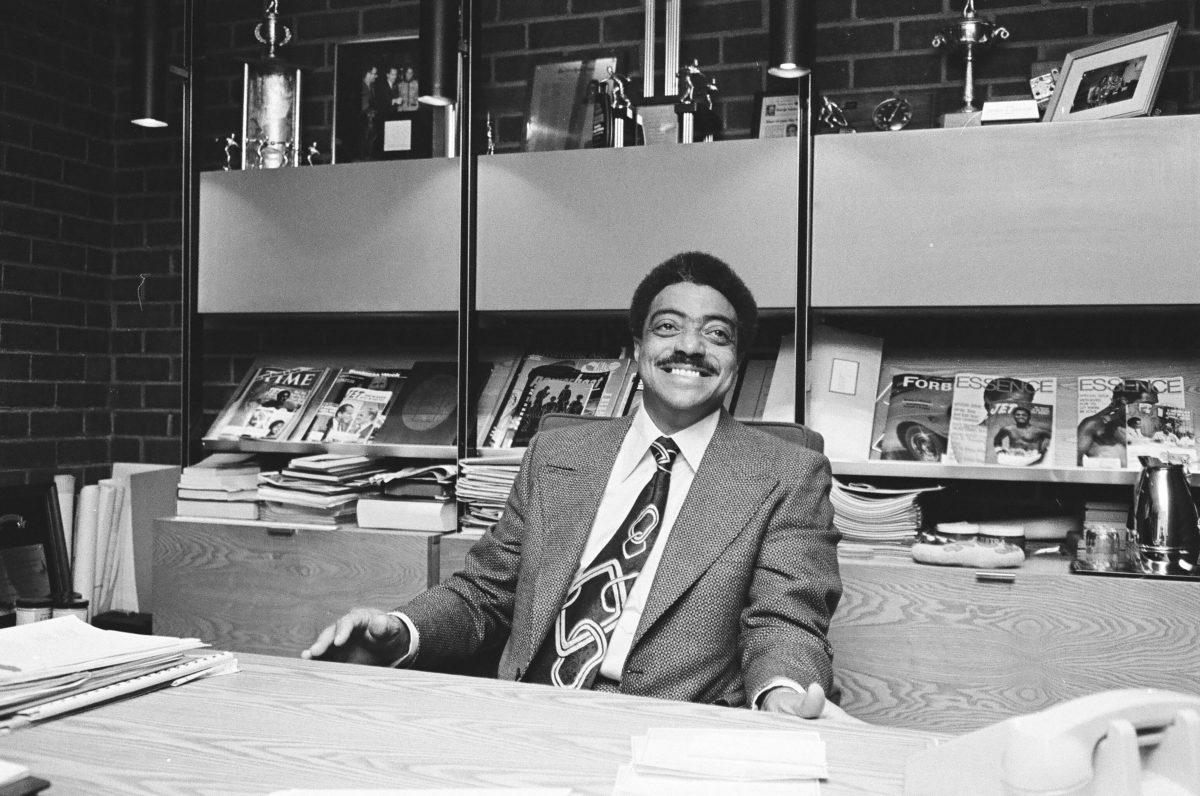
Born on June 16th, 1927, in Richton, Mississippi, George entered a world where opportunity for Black Americans was deliberately limited. When he was just two years old, his family joined the Great Migration, settling in Chicago in search of the promise that so many Black families hoped the North might offer. George learned the value of work early. He shined shoes as a boy and held whatever jobs he could find to help support his family. Financial realities forced him to leave high school before graduating, but they never diminished his curiosity or his ambition. Instead, they sharpened his instincts. He learned to recognize problems, to listen carefully, and to see opportunities where others saw none. And at his death, he had been awarded almost 10 honorary doctorate degrees from various universities.
After gaining experience working for the legendary entrepreneur Samuel B. Fuller, George struck out on his own. In 1954, he and his wife, Joan Henderson—whom he had met in high school—founded Johnson Products Company with $500. Part of that amount was a $250 loan that a bank gave him to “take his wife on a vacation.” (He had been turned down for a loan in that amount to start a business.)
It has all the ingredients of a classic American success story, but what made George remarkable was not simply that he started with very little. It was that he recognized an entire community whose needs had been overlooked. For years, Black consumers had largely been ignored by major manufacturers. Products formulated specifically for Black hair were limited, and advertising rarely reflected Black beauty with dignity or pride. George understood that serving this market meant more than selling shampoo or hair relaxers. It meant telling millions of people that they mattered.
His products—including Ultra Wave, Ultra Sheen, Afro Sheen, and later Classy Curl—addressed practical needs, but they also arrived at a pivotal cultural moment. As the Black Is Beautiful movement encouraged African Americans to embrace their natural features and reject decades of imposed standards, Johnson Products became part of a larger affirmation of identity. His advertisements didn’t ask Black Americans to aspire to someone else’s definition of beauty. George’s business grew into one of the most successful Black-owned companies in America, eventually dominating the Black hair care market. In 1971, it became the first Black-owned company listed on the American Stock Exchange. This resonated as far more than a financial achievement. For many Black Americans, it was proof that Black ownership could thrive on a national stage, that excellence and ambition were not exceptions but expectations, and that businesses rooted in serving Black communities could become institutions.
George’s influence extended far beyond commerce long before corporate America recognized the value of investing in Black audiences. Johnson Products became the first national sponsor of “Soul Train,” helping transform what began as a local Chicago television program into one of the most influential cultural platforms in American history. Through music, dance, fashion, and joy, “Soul Train” introduced millions of viewers to Black artists and Black creativity on their own terms. He believed economic opportunity was inseparable from civil rights. While marches and legislation transformed America in visible ways, George understood that ownership, employment, access to capital, and economic independence were also instruments of freedom. Having experienced discrimination in securing financing himself, he later helped establish Independence Bank of Chicago, creating opportunities for Black families and entrepreneurs who had too often found traditional financial institutions unwilling to invest in their futures.
If there is a thread running through George’s remarkable life, it is that he consistently opened doors he had once been forced to knock on himself. He built products that affirmed identity. He created a company that created opportunity. He invested in culture before others recognized its value. And he built institutions that would continue serving communities long after he stepped away.
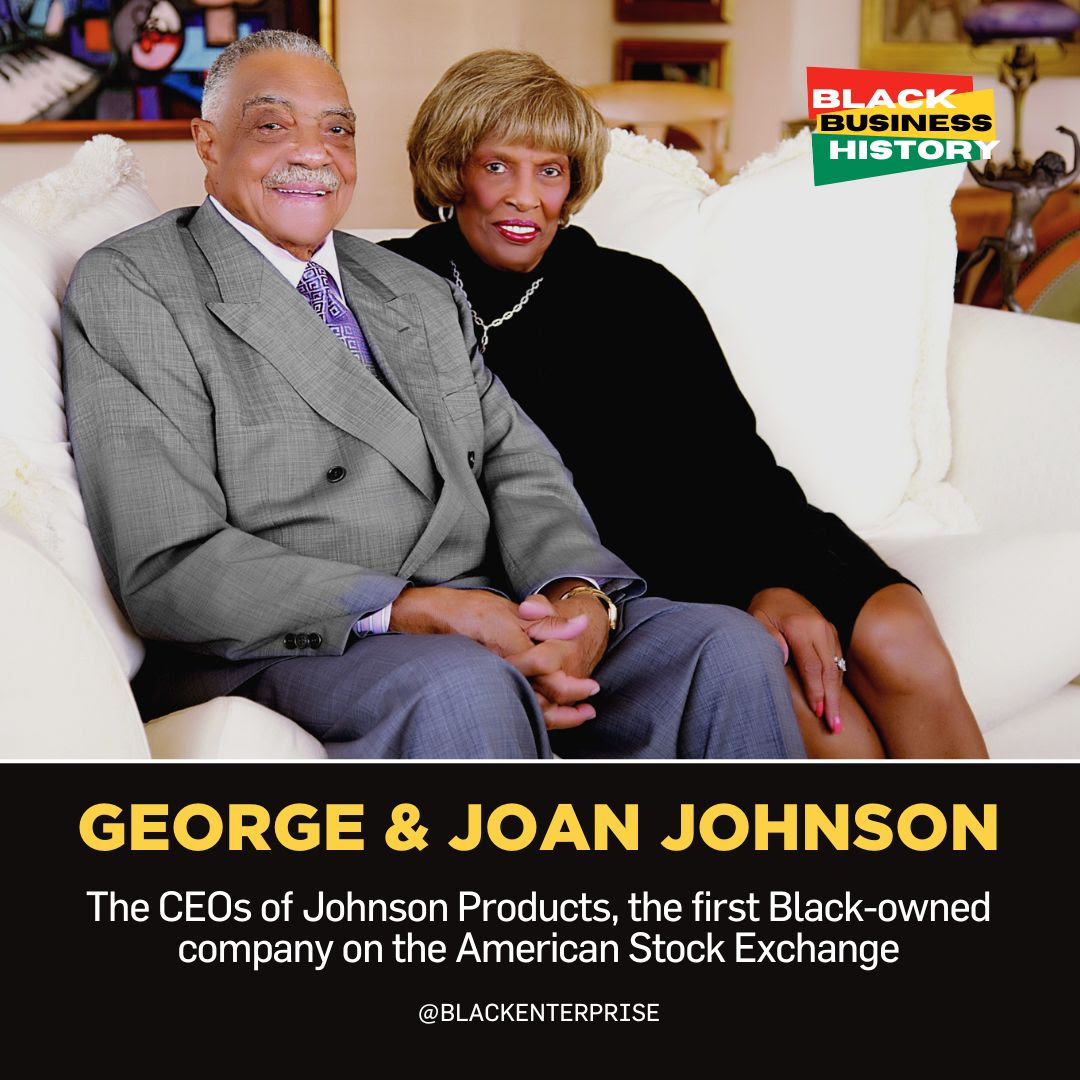
On a personal note, I had the great fortune of knowing not only George but all three of his wives (the middle of which has been left out of most tributes I’ve read). All three wives were smart, beautiful and accomplished. But it was Joan with whom George started their business and with whom he had four beautiful children: Eric, Joan, John and George E. Johnson, Jr. Joan was admired in the Black community. We shared confidences at the hair salon where we both were clients of the late Emory Jones.
Joan and George divorced after nearly four decades of marriage. But like a story from a fairytale, they later remarried in 1995, and remained so until her passing in 2019. Before they got back together, however, George was married briefly to Renée Derem, the founder of Chicago’s Sister-City relationship in Paris. I fondly recall spending time with the couple in both cities.
Then in 2022, George married his third wife, my longtime friend, the very accomplished Madeline Murphy Rabb. Madeline is an artist, designer, and veteran art advisor who once served as the Executive Director of the Chicago Office of Fine Arts. In addition to being an artist and curator, she is a Silver and Bronze Medalist in the National Senior Games. I remember George being greatly impressed by Madeline’s beauty and athleticism, which she demonstrated through her competitive swimming captured in Luchina Fisher’s acclaimed documentary short, “Team Dream.” The film won our Ebert Award at the 2023 edition of the Ebertfest Film Festival. Madeline is also one of the kindest women around.
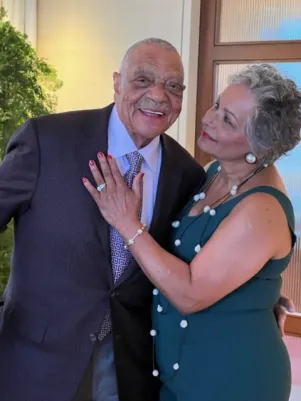
Together George and Madeline embraced a season of life that many people assume no longer exists in later years. They traveled, visited friends, and shared adventures. It is a beautiful reminder that life’s final chapters need not be defined by decline. They can also be marked by companionship, curiosity and gratitude. Just this past November, George was honored with the Edwin C. “Bill” Berry Civil Rights Award by the Chicago Urban League. And it was only weeks prior to his passing, according to his son Eric via AP News, that the Joan and George Johnson Program Room was dedicated to them at the recently opened Obama Presidential Center. President Barack Obama was in attendance for the dedication as was George, a crowning moment for a towering life.
When George took his final breath at the age of ninety-nine, Madeline was beside him, holding his hand. There is something quietly fitting about that image. A man who spent nearly a century building, creating, and giving was surrounded, in the end, by love. History will remember George as a pioneering businessman, a visionary entrepreneur, and one of the most consequential figures in the history of Black enterprise. Those titles are well deserved. Long before “Black excellence” became part of our everyday vocabulary, George was quietly living its meaning. His products filled store shelves. His vision expanded horizons. And his legacy will continue to grow in every entrepreneur bold enough to imagine a future that others cannot yet see.
from Roger Ebert https://ift.tt/uQ4LUVi
.png)


