
.png)
Steven Spielberg’s fourth film about alien encounters is “Disclosure Day,” following “ET: The Extra-Terrestrial,” “War of the Worlds,” and “Close Encounters of the Third Kind.” That inspired us to take another look at what Roger Ebert thought about some of the most famous and infamous alien movies, from the inspiring and friendly to the terrorizing and murderous, and from the big-budget blockbusters to the quieter gems.
Over the years, Ebert recommended Ridley Scott’s “magnificent” “Prometheus,” and, contrary to many other critics, M. Night Shyamalan’s “Signs.” He thought the last act was overdone, but he liked “District 9,” calling it “a seamless merger of the mockumentary and special effects,” and appreciated the “harsh parable…about the alienation and treatment of refugees.” He also liked the Spielbergian throw-back of “Super 8”: “A wonderful film, nostalgia not for a time but for a style of filmmaking, when shell-shocked young audiences were told a story and not pounded over the head with aggressive action. Abrams treats early adolescence with tenderness and affection. He uses his camera to accumulate emotion. He has the rural town locations right.” “E.T” and “Close Encounters” both made it into Ebert’s list of the all-time Great Movies.
Check out Ebert’s own look back at his reviews of alien movies on 2016’s World UFO Day, and this selection of his favorites and some of his least favorite, including the one the Razzies picked as the worst in 25 years.
The Best
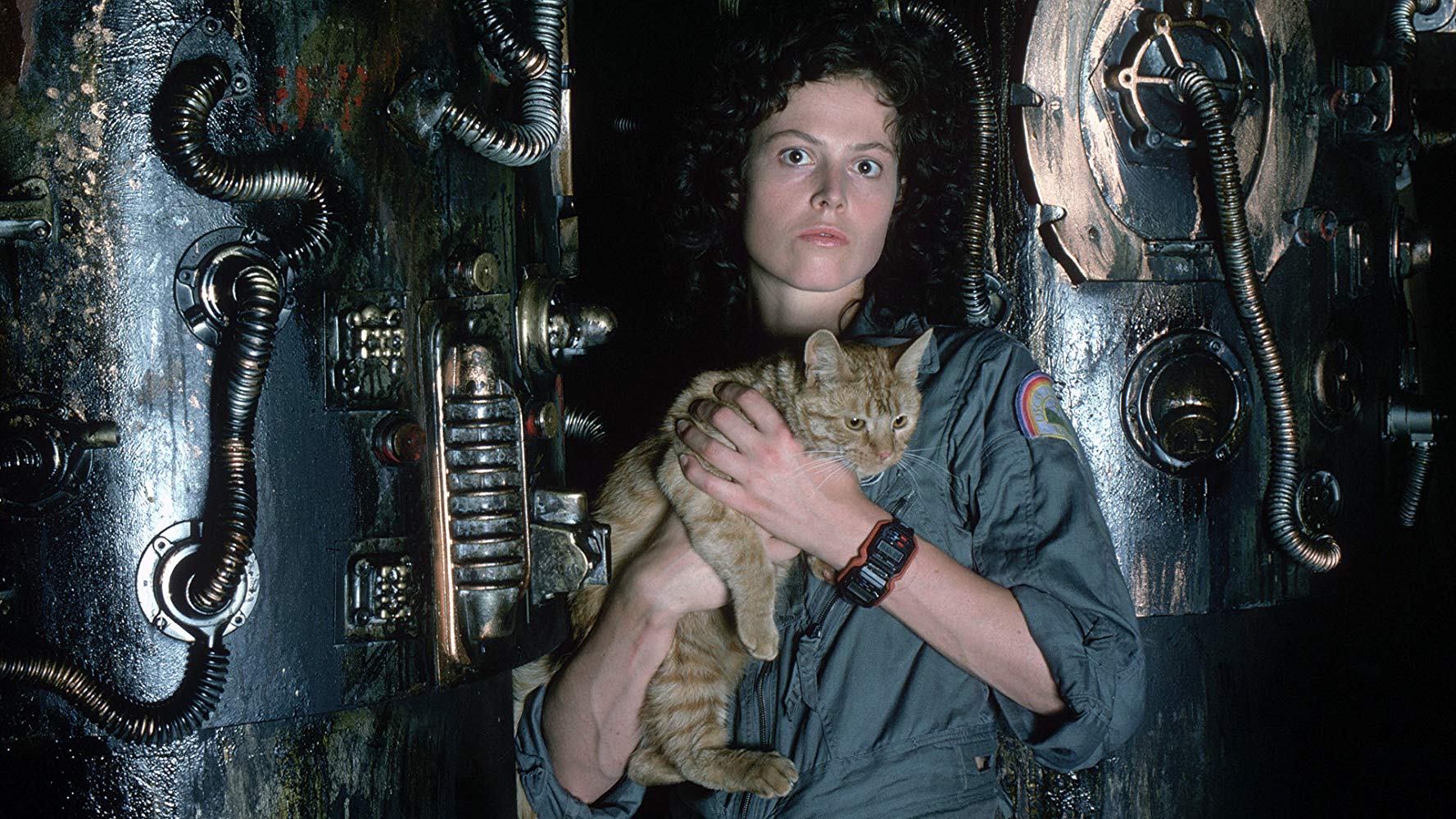
“Alien”
“At its most fundamental level, “Alien” is a movie about things that can jump out of the dark and kill you…. In another way, Ridley Scott‘s 1979 movie is a great original.” Ebert praised the film’s pacing. “It takes its time. It waits. It allows silences (the majestic opening shots are underscored by Jerry Goldsmith with scarcely audible, far-off metallic chatterings).”
While many people prefer the sequel, “Aliens,” Ebert did not. He said:
“The movie is so intense that it creates a problem for me as a reviewer: Do I praise its craftsmanship, or do I tell you it left me feeling wrung out and unhappy? It has been a week since I saw it, so the emotions have faded a little, leaving with me an appreciation of the movie’s technical qualities. But when I walked out of the theater, there were knots in my stomach from the film’s roller-coaster ride of violence. This is not the kind of movie where it means anything to say you “enjoyed” it.”
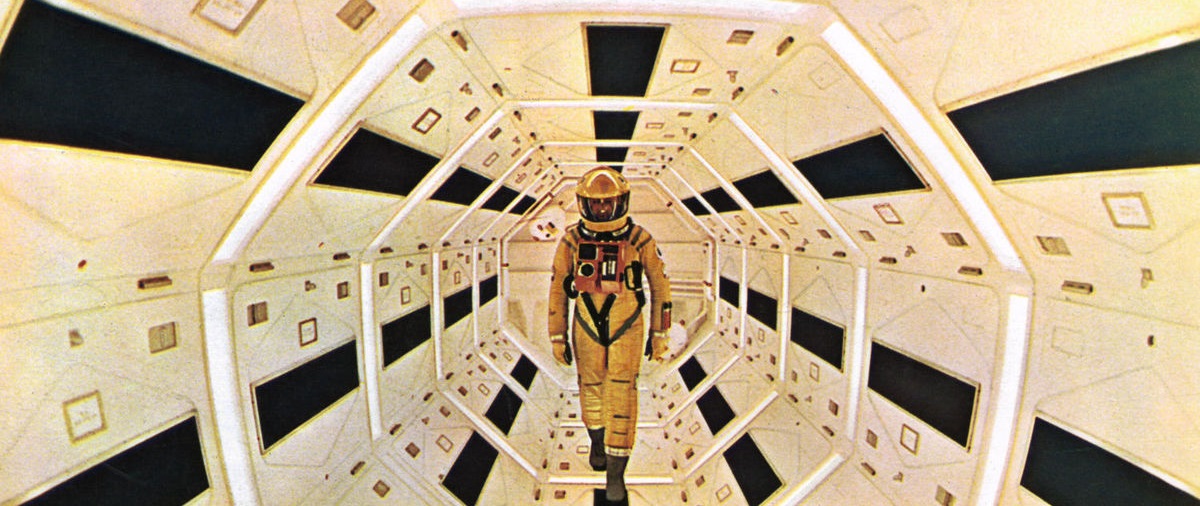
One year after Ebert began reviewing movies for the Chicago Sun-Times, he attended the premiere of this Stanley Kubrick’s space movie at the Pantages Theater in Los Angeles.
“To describe that first screening as a disaster would be wrong, for many of those who remained until the end knew they had seen one of the greatest films ever made. But not everyone remained. Rock Hudson stalked down the aisle, complaining, “Will someone tell me what the hell this is about?” There were many other walkouts, and some restlessness at the film’s slow pace (Kubrick immediately cut about 17 minutes, including a pod sequence that essentially repeated another one).
The film did not provide the clear narrative and easy entertainment cues the audience expected. The closing sequences, with the astronaut inexplicably finding himself in a bedroom somewhere beyond Jupiter, were baffling. The overnight Hollywood judgment was that Kubrick had become derailed, that in his obsession with effects and set pieces, he had failed to make a movie.
What he had actually done was make a philosophical statement about man’s place in the universe, using images as those before him had used words, music or prayer. And he had made it in a way that invited us to contemplate it — not to experience it vicariously as entertainment, as we might in a good conventional science-fiction film, but to stand outside it as a philosopher might, and think about it.”
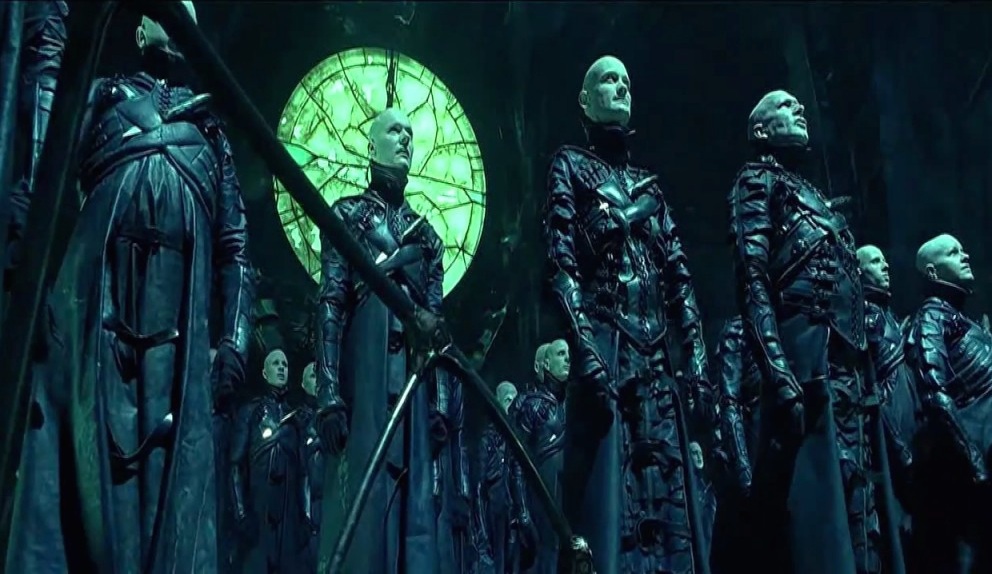
Ebert called Anton Proyas’s mash-up of noir and science fiction about aliens who distort and replace the memories of humans and even physical reality “a great visionary achievement…original and exciting.”
“The movie is a glorious marriage of existential dread and slam-bang action. Toward the end, there is a thrilling apocalyptic battle that nearly destroys the city, and I scribbled in my notes: “For once, a sequence where the fire and explosions really work and don’t play just as effects.” Proyas and his cinematographer, Dariusz Wolski, capture the kinetic energy of great comic books; their framing and foreshortening and tilt shots and distorting lenses shake the images and splash them on the screen, and it’s not “action” but more like action painting.”
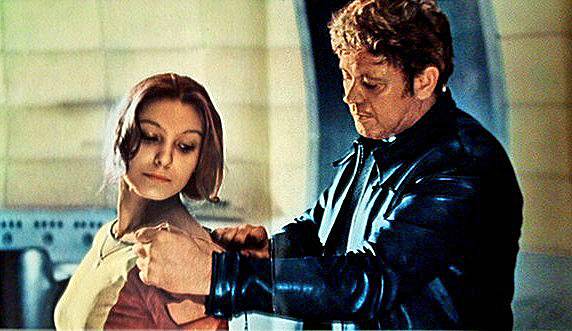
“Solaris”
Most aliens in movies either look like terrifying giant insects, lizard-like monsters, or cute and cuddly. In “Solaris,” the “Guest” looks and acts like the main character’s late wife, but with only some of her memories.
Ebert admitted that the first time he saw it, he “balked” because it seemed long and slow, with dry dialogue. But he changed his mind, writing, “The films of Russian director Andrei Tarkovsky are more like environments than entertainments…. He uses length and depth to slow us down, to edge us out of the velocity of our lives, to enter a zone of reverie and meditation.” Ebert gave 3 ½ stars to the “quiet and introspective” 2002 remake by Stephen Soderbergh.
The Worst

It was the top box office hit of 1996, but Ebert was not impressed, calling it “a virtual retread–right down to the panic in the streets, as terrified extras flee toward the camera and the skyscrapers frame a horrible sight behind them.” He admitted it was fun in a silly summer action movie way but said there were too many convenient plot holes and too many under-written characters with just one attribute each. “If an alien species ever does visit Earth, I for one hope they have something interesting to share with us. Or, if they must kill us, I hope they do it with something we haven’t seen before, instead of with cornball ray-beams that look designed by the same artists who painted the covers of Amazing Stories magazine in the 1940s.”
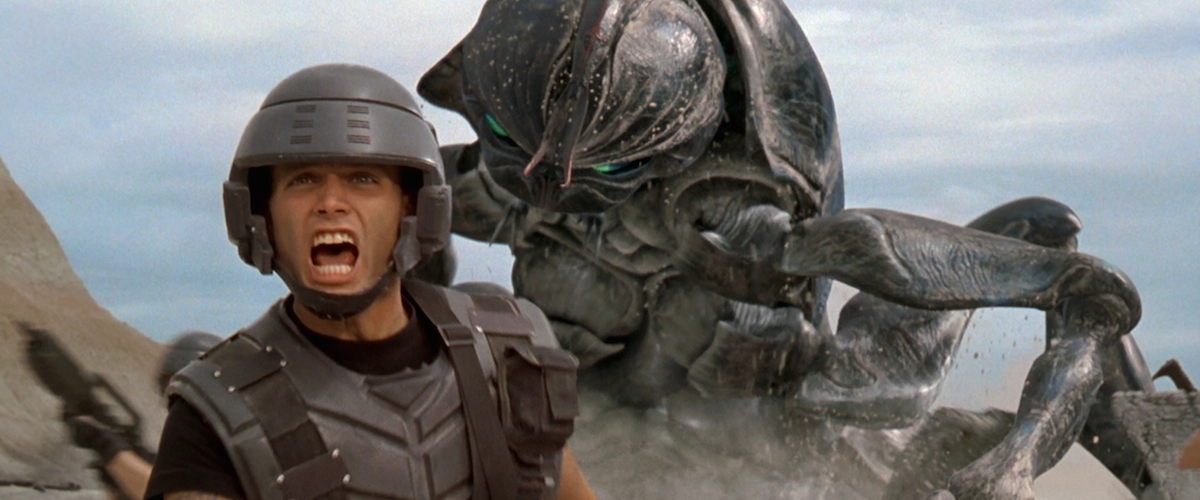
It was panned by some critics and dismissed by ticket-buyers, though some now see it more as an intentional parody than a failed attempt at a sincere sci-fi adventure. Ebert gave it two stars and called it “the most violent kiddie movie ever made.” The aliens “aren’t important except as props for the interminable action scenes, and as an enemy to justify the film’s quasi-fascist militarism.”
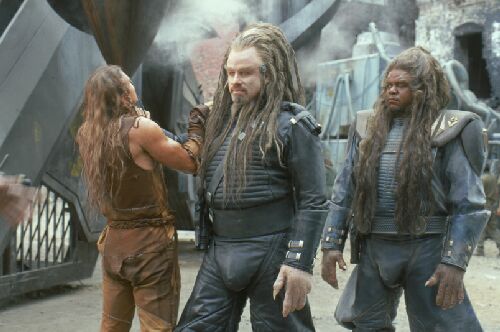
This film, based on the book by Scientology’s L. Ron Hubbard, was a passion project for John Travolta. It takes place a thousand years after aliens have conquered earth and enslaved humans. Ebert’s description:
“Like taking a bus trip with someone who has needed a bath for a long time. It’s not merely bad; it’s unpleasant in a hostile way. It’s not merely bad; it’s unpleasant in a hostile way. The visuals are grubby and drab. The characters are unkempt and have rotten teeth. Breathing tubes hang from their noses like ropes of snot. The soundtrack sounds like the boom mike is being slammed against the inside of a 55-gallon drum. The plot … This movie is awful in so many different ways.”
That was the general consensus. The worst-of-the-year Razzies not only gave it seven “Golden Raspberry” awards in the year of release but came back to give it a worst of their first 25 years in 2005.
from Roger Ebert https://ift.tt/0fiasZc
.png)


